
Milburn says the market failed young people. Disabled under-25s still face a £3.6bn cut
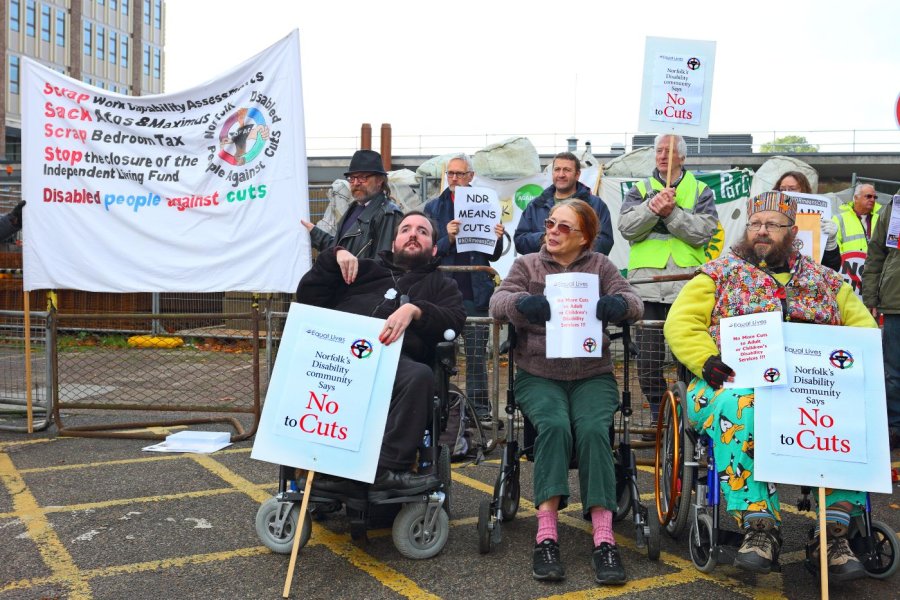
Roger Blackwell / Creative Commons
Alan Milburn calls leaving young people’s jobs to the market the “biggest fallacy” of 50 years. Yet his plan would cut young disabled people’s benefits by £3.6bn a year and MPs vote on it next year.
Alan Milburn has called relying on the market to get young people into work the “biggest fallacy” in public policy for 50 years. But his plan would still cut young disabled people’s benefits by a net £3.6bn a year, according to the Joseph Rowntree Foundation, and ministers have left that fight for a Commons vote next year.
The government has backed Milburn’s call, in his report From a welfare state to a working state, for a legal guarantee of work, training or education for every young person who needs it. But ending Pip and the universal credit health element for under-25s will not be settled until next year.
Work and pensions secretary Pat McFadden told MPs this afternoon that the cabinet had “endorsed the need for a whole new system for young people”. He called Milburn’s review a report “so fundamental that it alters what we see as the contract between government and society”.
Ministers will legislate for Milburn's opportunity and support guarantee. The Jobs Guarantee, a fully funded six-month job, will be offered after 12 months on universal credit instead of 18. Andy Burnham is setting up a Youth Opportunities Unit reporting directly to No 10. The government also accepts Milburn’s call for a more personalised system, delivered locally.
The benefit changes will come later. The government will publish Sir Stephen Timms’ review of Pip soon, then a white paper in the new year, followed by legislation. MPs will then vote.
McFadden set out the choice in stark terms. MPs could keep “the system we inherited”, which he said “far too readily signs people off and writes them off”, or back a new settlement. “Carrying on as we are has too high a human cost,” he said.
Support first?
Debbie Abrahams, Labour chair of the work and pensions committee, called the report “an opportunity of a generation” but raised concerns about sequencing. McFadden replied: “It's important that we put support in place before other changes take place.”
He said young people with “significant enduring additional costs” from a disability or health condition would continue to get help with those costs. He did not say whether young people already claiming Pip or the health element would be protected.
It is not a small group. In 2025, 44% of young people out of work, education or training reported a health condition that limits work, the report says. In 2015 it was 26%.
A £3.6bn cut
The Joseph Rowntree Foundation (JRF) says the review amounts to a net £3.6bn a year cut to disability benefits for young people by 2036/37.
A young person on the lower health rate and both Pip components at the enhanced rate currently gets about £245 a week from those payments. Without them, a single under-25 would be left with basic universal credit of £78 a week.
Past cuts did not work, the JRF says. The 2017 cut to employment and support allowance raised severe poverty and worsened mental health, with no increase in the number of people in work.
“The wider support offer won't succeed if the young people it is meant to help are also struggling to afford food or the bus to college,” said Katie Schmuecker, JRF's principal policy adviser. The foundation wants an “essentials guarantee” alongside Milburn's guarantees.
“The biggest fallacy”
Launching his report, Milburn said governments had spent 50 years trying to fix youth unemployment by making young people more employable and leaving the rest to the market.
“The biggest fallacy, in my view, in public policy over 50 years, is that the youth employment problem could be solved purely by fixing the supply side,” he said. That meant trying to “make the young person more employable, raise the standards in the schools, improve their skills, toughen their benefits”.
“The labour market, it was assumed, would then do all the heavy lifting and get young people into work. It hasn’t.” Government now needed to focus on demand, he said, with “a new bargain” with employers.
Yet “toughen their benefits” is on his own list of failures and his report still does it. Milburn said he had rejected faster savings because “crude benefit cuts” would “plunge more young people into destitution”.
The shortage of jobs is real. Research by the Institute for Public Policy Research (IPPR) found young people in Rotherham have just 46 vacancies for every 1,000 young adults, against 288 in the Cotswolds.
Reaction
Green party leader Zack Polanski called the proposals “a flimsy sticking plaster”. “What we're seeing is a plan to slash support for disabled young people while subsidising big corporations to hire cheap labour,” he said. He wants young people trained for jobs in clean power and home insulation instead.
Unite welcomed lower national insurance costs for employers of young workers, which it had pressed Milburn for. But general secretary Sharon Graham warned against “a race to the bottom for young workers’ pay, subsidising low paid work, punishing disabled people or underwriting redundancies”. “We have to answer the question, ‘who pays and how?’” she said.
Disabled People Against Cuts said: “Pip exists to help meet the additional costs of disability. It is not an unemployment benefit.” Mencap was more positive, calling the guarantees “a once-in-a-generation opportunity”.
IPPR executive director Harry Quilter-Pinner backed the reforms but warned that “a desire to save money should not plunge these people into destitution”.
The fight ahead
For Labour's left, today is half a win. John McDonnell said campaigners had secured recognition of the support young people need. “But the question remains why is it that it is sick and disabled young people who are expected to pay for this new system with benefit cuts of between £50 to £100 a week,” he said.
He pressed McFadden in the Commons. If under-25s were being denied Pip and the health element, McDonnell said, then young people were being asked to fund the reforms. Why not tax the rich instead? McFadden did not answer directly. He said the settlement would offer young people a better deal, citing a previous report by Charlie Mayfield that found people on long-term benefits could lose up to £1m in lifetime earnings.
Richard Burgon, a leading figure in last year's backbench revolt over welfare cuts, said there was “some really welcome stuff” in the report. But he asked for an assurance that sick and disabled people would not be forced into poverty by the Pip and health element cuts.
McFadden pointed back to the report. It was clear, he said, that “help will be there for those with both severe, long-lasting disabilities which make work not a realistic possibility, and also [for] those that will have extra costs”.
Three times this afternoon, MPs asked who would bear the cost. Each time, McFadden answered with the support on offer rather than a guarantee on income.
The months before the white paper give the left time to make the case for another way of paying for it, John McDonnell said, by “taxing wealth not the sick and disabled. Let's get to work to win that argument.”

Left Field · Contributor
Left Field reporters

Left Field's collective of writers have contributed to this article.
Related
-
1

Milburn benefit cuts will push young disabled people further from work, JRF warns
-
2

A job guarantee for some is no guarantee at all
-
3

Milburn cuts are the test of Burnham’s promise to end neoliberalism, says Clive Lewis
-
4

Milburn would end Pip for under-25s as Labour left warns of crude cuts
-
5

Currently reading
Milburn says the market failed young people. Disabled under-25s still face a £3.6bn cut
-
6
Milburn gets No 10 role to drive through his plan, Pip cuts and all

Popular This Week

More to explore



Tell Google you want to see more from us - set Left Field as a preferred source in your search results.

