
Milburn would end Pip for under-25s as Labour left warns of crude cuts
By Andy Walker

Alan Milburn wants billions spent on a new youth opportunity service. But his plan would also end Pip and the universal credit health top-up for under-25s, setting up a clash with Labour’s left.
Alan Milburn has called for a “complete system reset” for young people out of work. His plan would rebuild employment support from scratch. It would also tear up the benefits system for everyone under 25.
His final report, From a welfare state to a working state, was published today. Its centrepiece is a new youth opportunity service in every part of England by 2029. It would be backed by two legal guarantees – a route into work or training, and the support needed to take it up. Many of the changes apply only in England, though some welfare and tax measures cover the whole UK.
But the price is a smaller safety net. Under-25s would no longer be able to claim personal independence payment (Pip) or the health element of universal credit. Instead, they would get a “youth allowance” paid at the standard universal credit rate, around £80 a week.
Speaking on BBC Radio 5 Live this morning, Milburn said young people “are putting in the effort” but were not getting the opportunity or support they need.
He said the report proposes, for the first time, a legal entitlement to “an opportunity of a job, an apprenticeship, a college place, a supported internship, a bit of part-time work, a cadetship”. It would be backed by a support guarantee covering mental health care and job coaching.
But the entitlement comes with strings. As opportunities increase, Milburn said, young people would be obliged to take them up. “We don't want people languishing on benefits when they could be in work.”
On Radio 4’s Today programme, Milburn said government spending on helping young people into work would increase. “We need to give young people what they want,” he said. “They would rather be in work than on benefit.”
Pressed on current claimants, he said there would be targeted support for those who need it, including people who cannot work. He said there would be no crude benefit cuts.
But he did not say whether existing claimants would keep Pip or the health top-up. Last week he told The Times the changes would hit existing claimants as well as new ones.

A lost generation
Nobody disputes the scale of the problem. Almost one million 16 to 24-year-olds are not in education, employment or training (Neet). That is around one in eight. Six in 10 have never had a job.
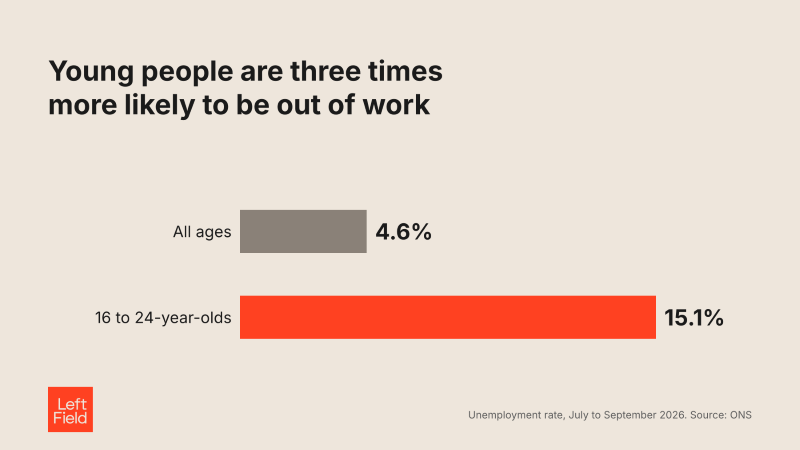
New figures out this morning show the gap. The Office for National Statistics said overall unemployment fell to 4.6% in July to September. For 16 to 24-year-olds, the rate was 15.1%, more than three times higher.
Milburn warns the figure could reach 1.25 million by 2031 without action. He puts the cost to the economy at £125bn a year in lost output, tax and extra spending.
Milburn rejected the idea that under-25s are “snowflakes”. "When I look at other countries, they don’t have better young people, they have a better system in place,” he told Today.
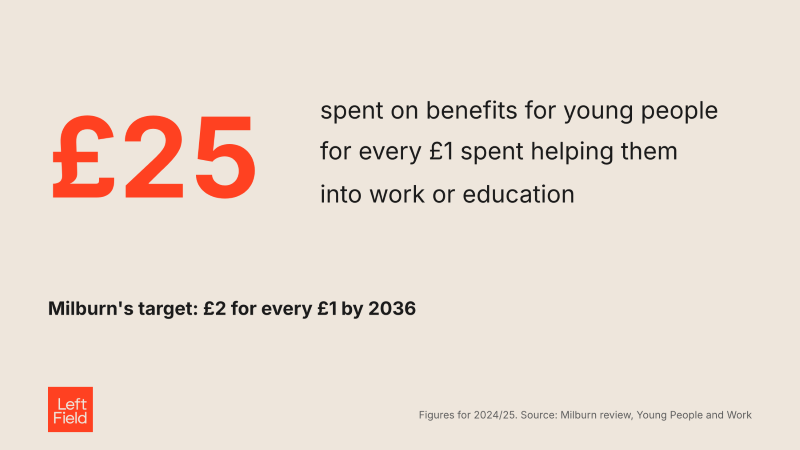
His review found that 84% of Neet young people want to be in work or training. The system, he argues, is failing them. For every £1 spent helping young people into work, £25 goes on benefits.
“A lost generation is not a fact of life,” Milburn says in the report. “It is a choice. And I believe it is the wrong one.”

What Milburn proposes
Under the youth opportunity service, run by mayors and strategic authorities:
A named adviser within 14 days of first contact, and a plan within four weeks setting out what the young person and the state will each do.
A route into education, training or work within four months – a statutory duty on the local authority.
A £3,000 payment to employers who take on a young person who has been inactive for six months, plus £2,000 if the young person has been in care or is disabled.
After 12 months, a guaranteed six-month paid job, whether or not the young person claims benefits.
Mental health support without needing a formal diagnosis.
Doubling the number of young people completing apprenticeships by 2036, to “rival university as a mainstream destination”.
An extra 150,000 further education places for 18 to 24-year-olds, with mayors and employers developing new industry-led technical colleges.
Doubling the employer national insurance threshold for 21 to 24-year-olds in retail and hospitality to £10,000, phased in over five years.
The review’s modelling suggests the reforms would help around 440,000 young people into sustained work by 2036.
The benefits overhaul
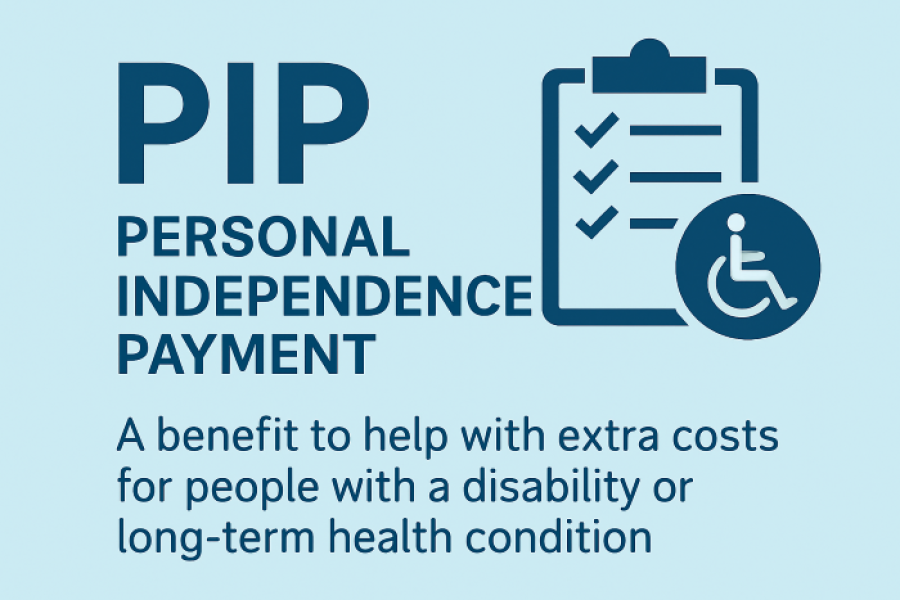
The welfare changes are where the fight will be. Pip would be replaced for young people by an “additional costs allowance” for those with significant disability-related costs. A devolved health and disability fund would cover short-term costs. A “severe and complex needs insurance” scheme would support the small minority judged never able to work.
The work capability assessment for the health top-up would go. The report reportedly accepts the new system is less generous.
Milburn has already admitted the changes will not be “pain-free”. He told The Times they would hit existing claimants as well as new ones.
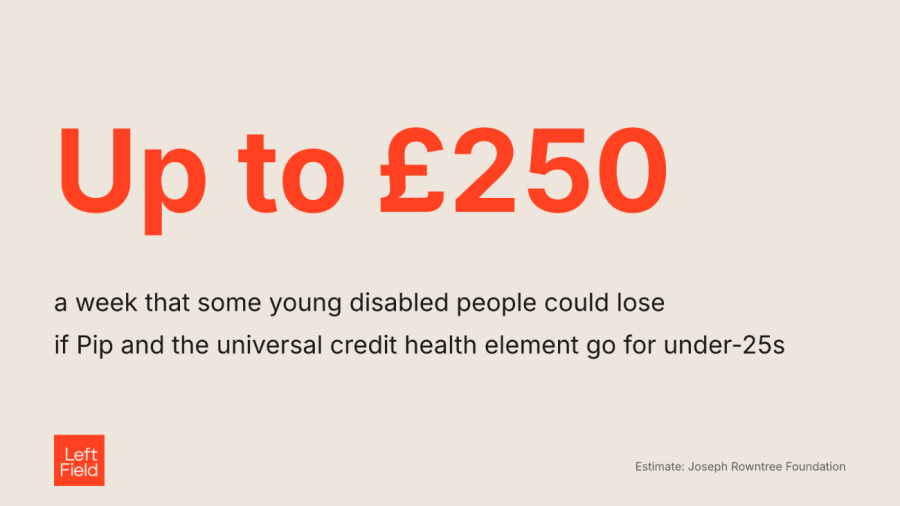
The Joseph Rowntree Foundation estimates some young people receiving both Pip and the health element could lose up to £250 a week. About 430,000 Pip claimants in England and Wales are aged 16 to 24.
Who pays?
The plan carries a big upfront bill. According to the Telegraph, it would cost £5.8bn a year by 2036. That would be offset by £3.6bn a year in welfare savings and £2.4bn from higher tax receipts and lower benefit payments.
The net saving after a decade is just £200m a year. Put another way, £3.6bn a year in reduced support for young people helps fund the new service.
Milburn insists this is not austerity by another name. “If you do crude cuts in benefits, all that happens is that young people show up somewhere else on the government ledger,” he told the BBC.
He told BBC Breakfast the plan would need new laws, new institutions and a “downpayment” of at least half a billion pounds. Asked how its success should be judged, he said the effect would show up in the welfare system.
Yet he insisted savings were not the point. “If we can get the benefits bill down, that is a good thing, but this is not about saving costs, it's about improving young people's lives.”
On Today he put it another way. “This is not a question of whether we spend money or we don’t, it's about how we spend it.”
Paying employers, again
Milburn told Today that employers would get £5,000 for taking on a young person. The report shows that figure combines two payments: £3,000 for hiring someone inactive for six months, and £2,000 more if they have been in care or are disabled. For most young people, that is the same £3,000 as the Youth Jobs Grant introduced in June.
Paying employers to hire young people has been tried before. The coalition’s Youth Contract offered up to £2,275 per hire from 2012. The government’s own evaluation found only 9% of employers who used it created an extra vacancy because of the money.
The current grant is already under fire. The Resolution Foundation estimated it would create 2,800 additional jobs, at a cost of around £36,700 each.
The backlash
Left Labour MPs are not convinced. Before publication, Nadia Whittome, Bell Ribeiro-Addy, John McDonnell, Apsana Begum, Clive Lewis and Richard Burgon wrote warning that an entire generation risked becoming disconnected from work and wider society.
McDonnell attacked the decision to trail possible benefit cuts ahead of the report as “the old Blairite/Alistair Campbell strategy”. He said he expected the government to uphold its commitment to no crude cuts. “Preventing young people's access to sickness and disability benefits will be interpreted by many as crude cuts,” he wrote on X.
Ribeiro-Addy told the Today programme last week: “I don't think you get a disabled young person into work by taking away the money that helps them get into work.”
Clive Lewis, another signatory, accused ministers of "manufacturing consent" for welfare cuts. “If poverty, poor health and lack of opportunity are keeping young people out of work, how does making some of them poorer solve the problem?” he wrote.
Charities share the concern. “Young disabled people shouldn't have to trade financial security for better employment support,” said Iain Porter, senior policy adviser at the Joseph Rowntree Foundation. In August more than 40 charities, including Scope, Mind, Shelter and Trussell, urged ministers to reject benefit cuts and harsher conditions for disabled young people.
Scope has called the trailed proposals “concerning”. The National Autistic Society says the plan will “live or die on the sequencing”.

A test for Burnham
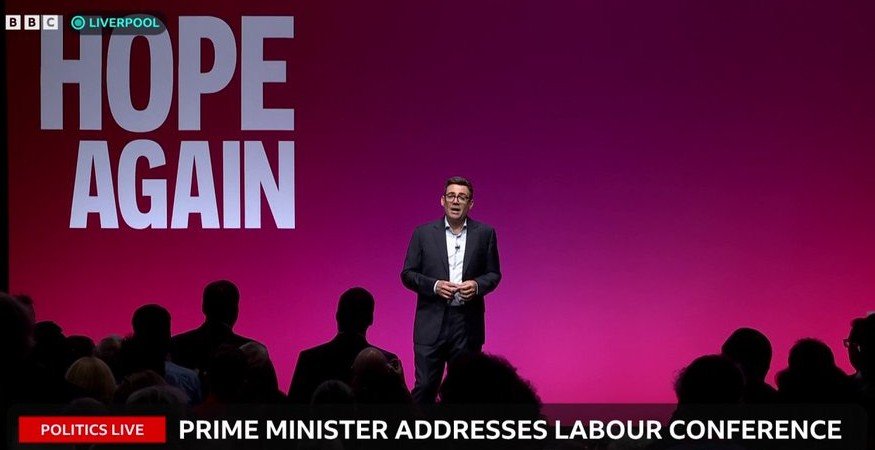
Andy Burnham is expected to back the recommendations. He has said the overhaul means the government must “invest up front in young people”.
Milburn told Today he believed Burnham would deliver the “system reset” that was needed. “This is a moral crisis for the country,” he said. “Young people want a fair chance to build a decent life.”
But Labour backbenchers have form. Last year they forced Keir Starmer into a U-turn on Pip cuts.
Milburn himself said Starmer got welfare “wrong” by failing to put young people’s lives at the centre of his plan. The system, he said, should ask how to help young people into work, not “what they can’t do”.
The right wants more. The Conservatives say the report is “too cautious” in parts and too reliant on the “expensive hand of the state”. Shadow work and pensions secretary Helen Whately called the savings “speculative, years away”. Reform UK is promising £50bn of cuts.
Sir Stephen Timms’ review of Pip is due shortly. Together, the two reports will shape the biggest change to disability benefits since Burnham took office.
This article was updated at 12.15pm on 17 November after publication of the report.

Left Field · Contributor
Andy Walker

Andy Walker is the founder and editorial director of Left Field. He is a journalist and the secretary of the Newcastle branch of the National Union of Journalists.
Related
-
1

Milburn benefit cuts will push young disabled people further from work, JRF warns
-
2

A job guarantee for some is no guarantee at all
-
3

Milburn cuts are the test of Burnham’s promise to end neoliberalism, says Clive Lewis
-
4

Currently reading
Milburn would end Pip for under-25s as Labour left warns of crude cuts
-
5

Milburn says the market failed young people. Disabled under-25s still face a £3.6bn cut
-
6
Milburn gets No 10 role to drive through his plan, Pip cuts and all
Popular This Week

More to explore



Tell Google you want to see more from us - set Left Field as a preferred source in your search results.

