Leading Labour: a Radio 4-grade history that stays inside Westminster
By Clive Hedges
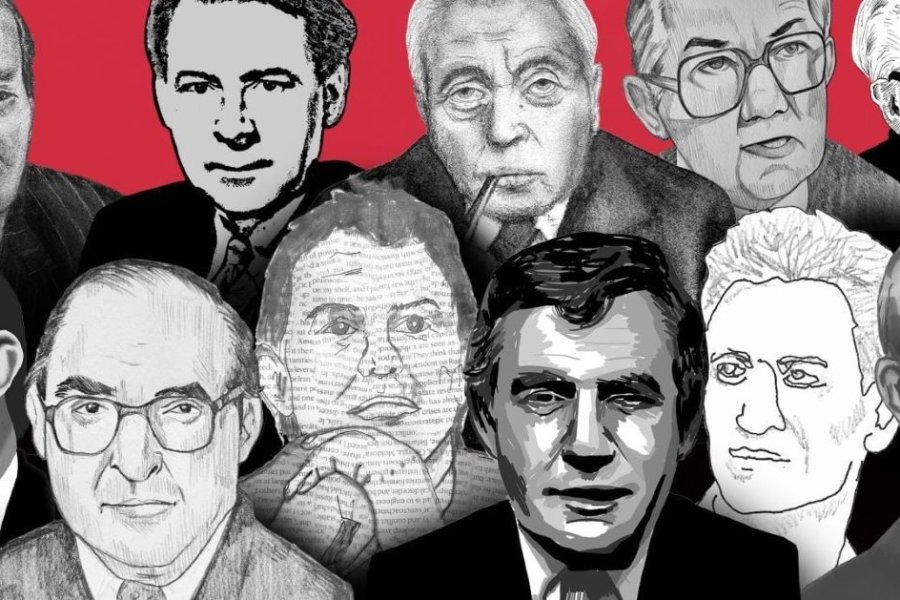
Izzy Conn has made a very listenable set of podcasts that will act as a resource for current and future students of political history.
From Attlee to Corbyn via Blair's “double shuffle”, Izzy Conn’s podcast series is sharper and better resourced than most left media can afford. Clive Hedges finds a lot to admire, along with a Westminster-shaped blind spot or two.
Being quite an avid listener of podcasts on history, politics and culture, I’ve become used to the standard two-mouths-and-a-microphone discussion prevalent amongst the usually strapped-for-cash left-wing podcast community. The Leading Labour podcast series, although not specifically from a left standpoint, is nevertheless a refreshing change in that it has the kind of production values, range of speakers and overall presentation more associated with Radio 4, giving it a different level of professionalism in terms of editing and amount of research (not to mention a catchy Oscar Peterson-reminiscent theme tune that I’d love to download by itself).
The podcast’s producer and host, Izzy Conn from the Institute of Historical Research at the University of London, has assembled an impressive range of historians, journalists, biographers and politicians, many of the latter being participants and witnesses to the events discussed, in order to relate the stories of Labour’s leaders from Atlee to Corbyn.
The focus is on how different Labour party leaders managed tensions within the party and avoided, or didn’t, open divisions and splits and reacted to events to try and build election-winning strategies. The series clearly aims to give a broadly sympathetic overview of each leader, whilst making some room for dissenting voices, although Conn is not completely averse to giving a broad- brush judgment on the overall performance of individuals at times. Foot’s leadership is noted as “disastrous” for the party at one point, for example.
She does admirably sidestep the problem with most biographical approaches to history, which seek to explain reactions to events, and even events themselves, by recourse to individual personalities. There is some detail of the early life of each leader but usually this is presented in a way that helps understand how their later pollical life relates partly to their family, educational and class background. Leadership style is often a focus, but more in terms of their approach to managing dissent and handling factionalism, rather than psychologising the issues.
A curious starting point
It is not clear why the series starts with Atlee, although possibly Conn rightly thought that a podcast on Arthur Henderson or William Adamson would have, to put it mildly, a niche audience; although it could be argued that understanding the Atlee government without studying at least the bruising experiences of the leaderships of Ramsay Macdonald or George Lansbury is difficult.
However, the Atlee government is the first time Labour had the chance to remake the British state and put their stamp on the nature of the country, providing the culmination of socially liberal policies around welfare started by Lloyd George and, adding to these, industrial nationalisation and the NHS. It could also be argued that the history of Labour governments since has largely been the slow unravelling of the basis of these changes, most notably the belief in central planning and Keynesian economic thinking that underpinned them. This kind of overarching history, à la David Edgerton, is not what the series is really about, however.
Strong on strategy, thin on the world outside Westminster
What the podcast is very good at is the detail of leadership reactions and drawing out the justifications for strategic and policy decisions. This means there is, until the Blair episodes (he, alone amongst the leaders, gets a three-part mini-series) little attempt to place each government in the longer history of cultural and economic changes outside of Westminster. Only academic Eunice Goes really gives this kind of wider perspective, noting in the Blair episodes how his policy changes signalled the acceptance of the neo-liberal settlement established by Thatcher and Reagan and how their approach to welfare and social policy simultaneously took from the working-class and wider labour movement as they gave to them; what Stuart Hall labelled “New Labour’s double shuffle”.
In a sense this is an unfair criticism, however, as Conn and her team never expressly set out to do this kind of wider social history in the first place. It does mean though that when landmarks occur, such as the legalising of abortion, or the Northern Ireland Peace Agreement, they appear somewhat as gifts from Westminster rather than the culmination of the actions of the women’s movement or of armed struggle.
Whose version of history?
Conn is scrupulous in introducing speakers with some description of who they are, and as a result, in the case of politicians, imply how their political standpoint may inform their comments. The episode notes also include an excellent guide to who the speakers are and where to find their writings. Understandably, for a podcast aiming for a wide listenership of those interested in the history of politics and political leaders, there is a preponderance of voices from actors, colleagues and others, like biographers, close to the individual in question. In the case of Neil Kinnock, he pretty much gets to relate the story of his leadership himself.
This and the fact that each episode tries to be sympathetically critical, means many of the commentators, including the academics, are people politically aligned to the individual concerned, although others are brought in, when a view on Conservative party reaction is needed, for example. Once the listener understands this stance and the way it shapes the narrative, it is possible to exercise a critical distance; something very much necessary, as many of the politicians and advisers interviewed usually appear no more reflective about their own politics than they were at the time, casually repeating terms like ‘modern’ and ‘moderniser’, for example, with no more obvious understanding of how it acts as a signifier of a particular political and social standpoint than they showed 20 or 40 years ago.
Blair, Brown and the double shuffle
The Blair mini-series perhaps focusses overly on the personal tensions between him and Brown but also has an excellent reflection on how their ‘double shuffle’ played out in terms of relations with the European Union and immigration, giving substantial time to an excellent analysis by the writer and academic Maya Goodfellow with regard to the latter. Eunice Goes returns with an interesting analysis of Miliband’s leadership and Conn draws on James Schneider and James Meadway for much of the commentary on Corbyn, which covers all the important achievements and failures of the period for the left and finishes with a neat encapsulation of both Corbyn’s time in the role and the nature of the Labour Party itself, rounding the series off nicely.
Overall, it has to be said that each episode does a very good job of squeezing an awful lot of history and events into a roughly hour-long period and simply to assemble this range of speakers and make a coherent narrative out of it is quite an achievement. In doing so Conn should be praised for making a set of podcasts that can itself act as a resource for future students of political history.
The Leading Labour podcast series can be streamed and downloaded on Spotify.
Left Field · Contributor
Clive Hedges

Clive Hedges is an academic and recovering ex-member of various political organisations who is currently unlucky enough to live in the constituency of Luke Akehurst MP.
Popular This Week



More to explore



Tell Google you want to see more from us - set Left Field as a preferred source in your search results.

