
Jackdaw approval: whose side is Labour on?
Adura
The government has approved the Jackdaw gas field, but its own energy secretary concedes it will not lower bills this winter. The Greens call it “climate vandalism”.
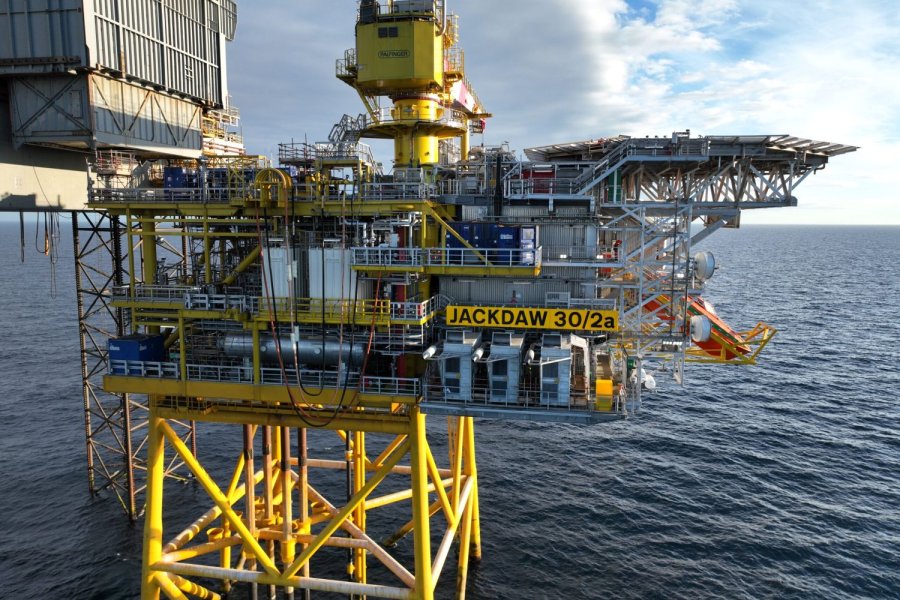
The government has approved the Jackdaw gas field in the North Sea, with gas expected to flow from the end of October. But the energy secretary, Miatta Fahnbulleh, admitted the gas “won’t lower energy bills this winter”.
Her comments to the BBC sit awkwardly with the prime minister’s. Andy Burnham said the decision “will protect hundreds of jobs and help keep millions of homes warm this winter”. Fahnbulleh agreed that the industry regulator, the North Sea Transition Authority (NSTA), could grant consent for production. The NSTA confirmed consent this morning.
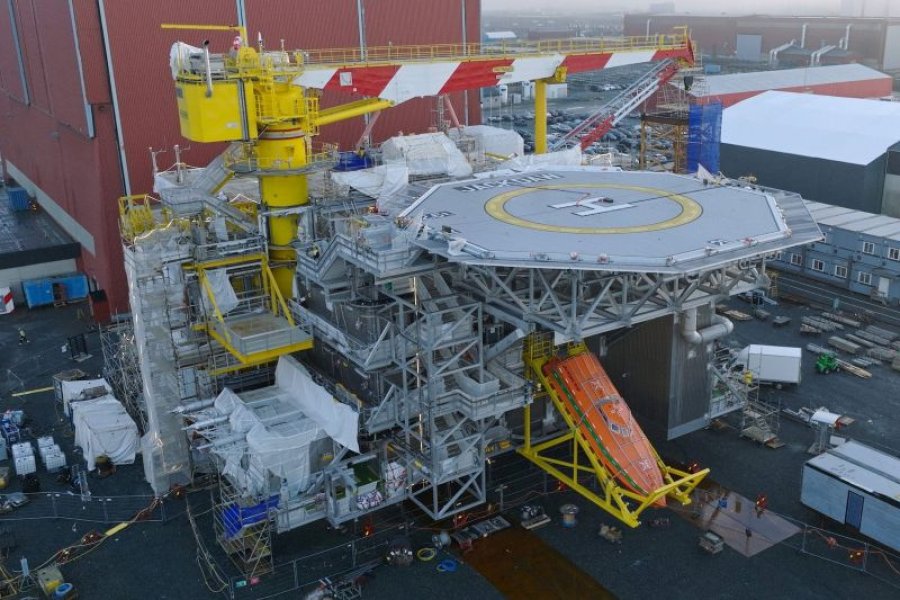
Jackdaw lies about 150 miles off Aberdeen. It is run by Adura, a joint venture between Shell and Equinor. The government says it could supply up to 6% of the UK’s domestic gas production at its peak, over a life of up to 11 years.
Alongside the decision, the chancellor, John Healey, announced a new Energy Wealth Fund. It will start with a £2bn downpayment of new money, to reinvest oil and gas revenues in renewable and low-carbon energy.
“A victory for Shell over the people”
The decision has drawn fierce criticism from environmental groups and the Green party. Green party leader Zack Polanski called it “climate vandalism”. “This is a victory for Shell over the people,” he said.
Friends of the Earth Scotland accused the government of “deliberately” putting “hundreds of thousands more people at risk”. “Giving Jackdaw the green light is guaranteeing more climate impacts like the deadly heatwaves and wildfires in the UK this summer, and the devastating floods in Nepal,” it said.
WWF called the decision “disappointing”. “This decision will only support a tiny number of jobs, do nothing to lower prices, barely move the needle on growth, and undermine the UK’s climate leadership,” the charity said.
Burnham: “maximise” existing reserves
Burnham insisted the government remains committed to net zero by 2050. But he said the UK would still need oil and gas “for decades to come”. “At a time when people are really struggling, it’s right that we look in a responsible way at maximising the existing energy reserves we have in Britain that could help,” he said.
He claimed the approach would “boost our energy security, back British workers, ringfence future North Sea proceeds to speed up the green transition, hit our ambitious climate targets and – crucially – bring down bills”.
The chancellor, John Healey, said: “I want Britain’s energy wealth to spark a new wave of clean power to work for the British people.” The government says future North Sea revenues will flow into the fund over time. Scottish secretary Douglas Alexander called the decision “a win for Aberdeen, a win for Scottish workers”.
The government says Fahnbulleh assessed that Jackdaw will not stop the UK meeting its legally binding carbon budgets or net zero by 2050.
More drilling near existing fields
The announcement goes further than Jackdaw. Ministers will introduce Transitional Energy Certificates, allowing some production in explored areas next to existing licensed fields through so-called tiebacks. This will need new legislation. But the regulator has been asked to consider urgent cases sooner.
Campaigners are likely to see this as a test of Labour’s 2024 manifesto pledge not to issue new licences for oil and gas exploration.
Row over jobs
Critics say Jackdaw will provide just 27 direct, full-time jobs. On BBC Radio 4’s Today programme, Adura chief executive Neil McCulloch admitted that figure was “quite small”. He said it reflected only the number of beds on the platform. He claimed Jackdaw would support just under 300 jobs “associated” with Shearwater, a nearby hub where its fluids will be processed.
But the government’s own announcement, citing the developer, shows most of those jobs already exist. It lists 27 new direct jobs and 273 existing jobs “safeguarded”. Adura estimates the project will add £2.9bn to the UK economy.
Estimates of how much gas Jackdaw will contribute also vary. The government puts it at up to 6% of domestic production at peak. Campaign group Uplift has estimated it will meet just 2% of UK gas demand over its lifetime.
The Unite union welcomed the decision on Jackdaw. Its general secretary, Sharon Graham, said: “In my conversations with the prime minister and the chancellor, I have been very clear that whilst we of course support net zero, we cannot have a jobless transition, abandon our energy security or offshore our carbon responsibilities. That is why we have argued for this decision on Jackdaw.
“This gives us a bit more time to create and fund a concrete plan for commensurate jobs for workers currently working in the North Sea. Now we urgently need to use that and invest in industries like wind turbine manufacture and refining green jet fuel. We simply cannot let go of one rope until we have hold of another.”
A long road to approval
The Conservative government first approved Jackdaw in 2022. Legal challenges by campaigners followed. In 2024, the Supreme Court ruled in the Finch case that the emissions from burning fossil fuels must be considered when projects are assessed. In January 2025, Scotland’s Court of Session ruled that the consents for Jackdaw and the Rosebank oil field were unlawful on that basis. Both projects then had to go through a fresh assessment and consultation.
Labour’s 2024 manifesto pledged not to issue new oil and gas licences. Ministers argue Jackdaw does not breach that promise, because the field was licensed long ago.
Rosebank next?
Attention now turns to Rosebank, the UK’s largest undeveloped oil field, about 80 miles north-west of Shetland. Fahnbulleh told BBC Radio Scotland that Rosebank was a “different proposition” to Jackdaw, because its oil will be exported. She said no decision had been taken and that she would “look at it”.
A decision is expected within two weeks. Most observers now expect approval. Today’s government announcement does not mention Rosebank.
Before polling day in the recent Holborn and St Pancras by-election, Polanski accused Labour of delaying its North Sea decisions until after the vote. Labour held the seat.
Analysis: whose side is Labour on?
Jackdaw fits the pragmatic line on energy Burnham has signalled since taking office. Downing Street will argue it was a decision that had to be made and that it does not break the manifesto. But the government has effectively sided with big energy. Its own energy secretary concedes the gas will not lower bills this winter. On the developer’s own figures, it creates just 27 new jobs.
The Energy Wealth Fund is ministers’ answer – drill now and spend the proceeds on the green transition. It is a real commitment. The £2bn is new money and it should be welcomed. But it is small beside the scale of the transition. Beyond that downpayment, the fund will grow only as fast as North Sea revenues allow. And the tiebacks plan suggests more drilling, not less, is coming.
Labour can also point to Unite, which lobbied for the decision. Sharon Graham’s argument – don’t let go of one rope until you have hold of another – is a serious one. But it puts the burden squarely on ministers. If Jackdaw buys time, the test is whether the government uses it to build wind turbine factories and green fuel plants in Aberdeen, or simply waits for the next field.
That does not bode well for the other fights over vested interests coming up – not least in next week’s budget. That is where Healey must decide whether to ask more of banks and energy giants and where we will learn how a £2bn commitment fits inside fiscal rules that leave him only £10bn to £15bn of headroom.
Burnham will probably get away with Jackdaw. Polling day has passed and his personal ratings remain strong. But the question of net zero is not going away. Many Labour MPs want to see real progress on decarbonisation, green energy and green jobs. If Rosebank follows Jackdaw, they will be entitled to ask the question campaigners are already asking: whose side is this government really on?
Left Field · Contributor
Left Field reporters

Left Field's collective of writers have contributed to this article.
Popular This Week


More to explore


Tell Google you want to see more from us - set Left Field as a preferred source in your search results.

