Taking the win isn’t selling out
By Andy Walker
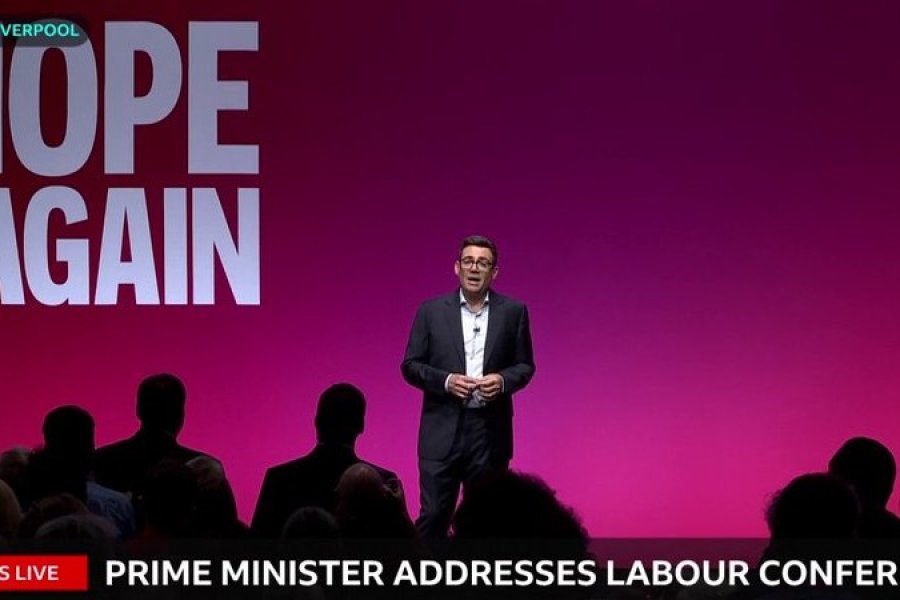
Andy Burnham’s Labour conference speech handed the left real gains and real fights. Crying betrayal squanders both – and says more about the critics than the prime minister.
Within minutes of Andy Burnham leaving the stage in Liverpool on 29 September, the verdicts were in. For some on the left, it was the most radical speech a Labour prime minister has made in half a century. For others, it was a betrayal. In the uglier corners of social media, it was something worse.
Both reactions tell you something. Only one of them is going to help anyone.
Let’s start with what was actually announced. A National Care Service. New leasehold reforms. VAT now off household electricity bills. An end to Thatcher’s ban on public ownership of water companies. A prime minister telling his own conference that Brexit has done more harm than good and promising a break with four decades of failed economic thinking. A first instruction, on his first day in office, to end rough sleeping. A national commission on reforming our unfair voting system.
None of that was on offer under Keir Starmer. Much of it would have been dismissed as fantasy a year ago.
Of course, it’s not the whole story either. The plan to replace the pensions triple lock with a “double lock” from 2030, partly to pay for the care service, is a genuine fight. Pensioners’ groups are right to have it and so is Unite’s Sharon Graham, who called the plan “morally wrong” and said the government should look at wealth taxes first. Burnham’s preference for tougher regulation over public ownership will disappoint anyone who believes, as many of us do, that rail and energy belong in public hands.
On water, scrapping Thatcher’s ban is a start, not a solution. Burnham calls it the beginning of a “10-year journey”. But the government admits the change won’t bring a single company into public hands straight away and the detail won’t come until his 10-year plan later this year. Seeing that through means winning at least two elections. That is a big ask.
His welcome words on a National Care Service were devoid of the most important commitment – nationalising care homes. Is that on the table? If it is, it is a fight he will have to wage with the international finance and private equity firms that own so many of those homes. Does he have the nerve? Anything less is a fudge. And how will he recruit carers – and who pays to raise their wages?
Also, the unions appear to be secondary to his new consensus. This is a government of parliamentary reviews, not collective bargaining. These are all serious arguments. They deserve to be made loudly. But there is a difference between making an argument and delivering a verdict.
The comfort of betrayal
A section of the left seems to have decided, before a word was spoken, that Burnham would fail. That he must fail. That anyone who sees anything worth defending in his government is naive at best and a total sell-out at worst. Every step forward becomes evidence of a deeper plot. Every compromise becomes a betrayal. Every ally who points to a real gain becomes a target.
This isn’t criticism. It is a kind of comfort. If the outcome is always betrayal, you are never wrong, never implicated and never required to do the harder work of pushing a government you didn’t choose towards outcomes you want.
It also has a cost. Unpaid carers gain nothing from the left being proved right about Burnham’s inevitable failure. Leaseholders gain nothing. Pensioners facing the double lock gain nothing either, because a movement that screams betrayal at everything has no credibility left when it matters. The only people who benefit are those waiting for Labour to collapse – and Reform UK is at the front of that queue.
The far right doesn’t need our help telling working-class voters that nothing ever changes.

Critical friends
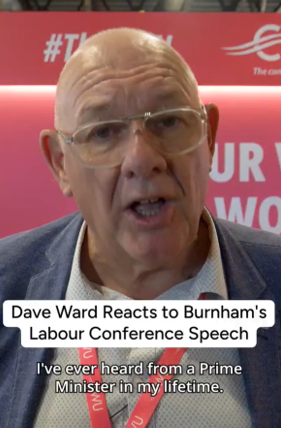
A trade unionist in the conference hall put the difference well. Starmer, he told openDemocracy, treated criticism from the unions and the left as a hostile attack. Burnham appears to see them as critical friends and wants to keep the relationship even when they disagree. Even Green leader Zack Polanski, beaten by Labour in last week’s Holborn and St Pancras by-election, says his party should now push Burnham on the budget, because “he’s got a chance now”.
That is the posture worth adopting. Critical friendship means backing the care service and fighting the triple lock change. It means welcoming leasehold reform and pressing hard for public ownership. It means welcoming warm words for the unions and demanding sectoral bargaining, which would be better still. It means holding two thoughts at once, which is what movement politics has always required.
The labour movement has done this for more than a century. Unions negotiate with employers they would never vote for, bank the gains and come back for more. Nobody calls a pay deal a betrayal because it falls short of abolishing wage labour. Take the win and keep fighting isn’t a soft-left slogan. It is how nearly every advance for working people in this country has ever been secured.
Why this matters to Left Field
This is why Left Field works the way it does. We are a collective, not a faction. Our contributors include Labour members and people who tore up their cards years ago, Greens, Your Party supporters, independents and trade unionists who belong to no party at all. They won’t agree about Burnham. They shouldn’t have to.
What we ask is simple. Argue with the policy, not the person’s soul. Back your claims with evidence. That is written into our contributor guidelines and it isn’t there for decoration.
Pluralism is not cheerleading. We will hold this government to account – hard – when it gets things wrong. If the care service stalls, if the double lock hits the poorest pensioners, if regulation proves toothless, we will say so. The first real test comes with the budget on 28 October. And we will also publish the people who say it best, whichever corner of the left they come from.
What we won’t do is treat every gain as a trap and every ally as a traitor. The left has spent too long losing to afford the luxury of despising its own victories.
Burnham closed his conference speech by promising that we will hope again. Hope isn’t a strategy. But despair has never won anything either.
Left Field · Contributor
Andy Walker

Andy Walker is the founder and editorial director of Left Field. He is a journalist and the secretary of the Newcastle branch of the National Union of Journalists.
Popular This Week



More to explore



Tell Google you want to see more from us - set Left Field as a preferred source in your search results.

