
Jamie Driscoll’s plan to escape Britain’s economic doom loop
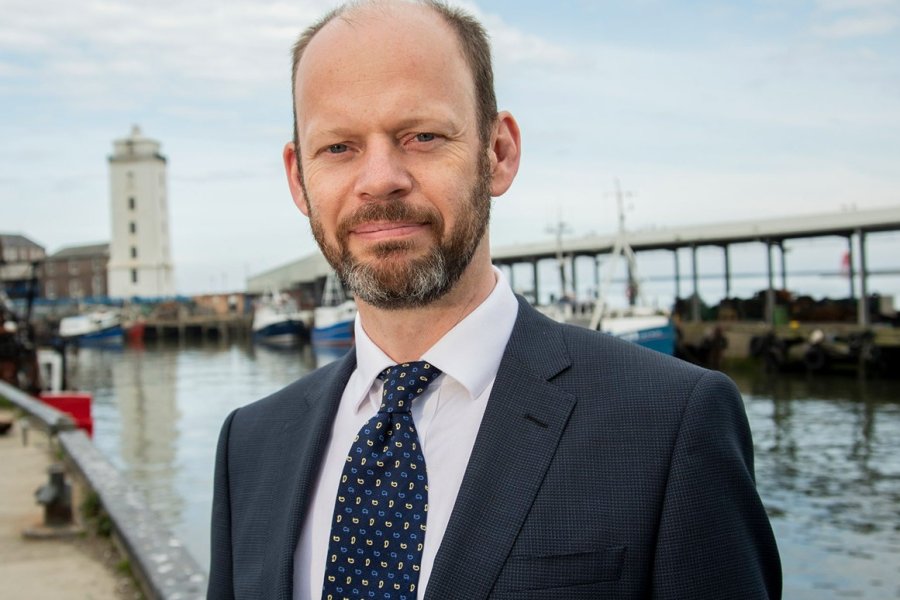
Former North of Tyne mayor, now a Green councillor on Newcastle City Council, Jame Driscoll is one of the left’s most influential thinkers.
The former North of Tyne mayor turned Green councillor on his new report Hostage Nation – and why the left needs a plan for power, not just an argument for it.
From 2019 until 2024, Jamie Driscoll was the elected mayor of the North of Tyne Combined Authority. At that time, North of Tyne was the largest single electoral unit in England, stretching from the north bank of the Tyne in Newcastle up to the Scottish border.
In 2023, Driscoll was barred by the Labour Party from standing for his own re-election for sharing a stage with film director Ken Loach at a cultural festival discussing the release of Loach’s film The Old Oak which had been filmed in the north east. Driscoll stood in the 2024 election for the new north east mayoral area – something that he had helped to negotiate and secure with new powers and funding from central government – coming in second as an independent with over 28% of the vote.
Driscoll later founded Majority, a grassroots movement based primarily in the north east, bringing together people and activists for political education, training in local government and building community around progressive ideas. In 2025, Driscoll had a cameo appearance in the rocky formation of Your Party, but he has since joined the Green party as one of the party’s “highest profile” joiners since the Green surge under Zack Polanski. In 2026, Driscoll was elected as a Green to Newcastle City Council in an election that saw his former party, Labour, collapse from being the largest party on the council to holding only two seats.
Now a major personality in the Green Party, Jamie Driscoll has published Hostage Nation, a milestone report diagnosing various problems in the British economy, and – more excitingly – offering a blueprint for what can be done. Left Field caught up with him for this interview.
Tell us first about your political journey. How much for your views in this report are shaped by your experiences as North of Tyne metropolitan mayor?
Being elected as mayor meant the challenge of putting your ideas into practice, not just falling back on slogans and abstract ideas. Even though budgets and fiscal powers are shaped ultimately by Westminster, we demonstrated that it was possible to implement concrete policies at a local level that changed people's lives.
We hit our 15-year target for job creation in four years, creating high-quality and high-skilled jobs in the north east. I also developed plans for an integrated transport system that have now been implemented by my successor. Crucially, we showed that investment in local jobs in the real economy is not a drain on public resources. Every £1 we invested creating jobs returned more than £3 for the Treasury in increase payroll taxes alone. Money spent on wages stays in the local economy, supporting more jobs and local businesses.
Keir Starmer won the general election for Labour in 2024 with a huge majority, but he didn't seem to know what to do with it and polling suggests that he would have lost it quite spectacularly had he stayed on as leader until the next election. This made me realise how many British politicians on the left and the right lack both the vision and the understanding of how to translate their policy objectives into an action. Fast forward two years and that is why I wrote Hostage Nation. The left’s arguments are sound. We need activists who feel confident and informed – and leaders with a plan that they can implement once in office.
When you held office in North of Tyne you were part of a small army of left-of-centre Labour metro mayors in the north, along with Steve Rotherham in Liverpool and Andy Burnham in Manchester. Andy has since gone on to higher things. Do you still have his number?
Andy’s a good guy and he and Steve were very vocal in criticising my deselection by Labour in 2024. Andy Burnham also endorsed my earlier report on Regional Wealth Generation, published by the Royal Society of Arts, when he and I were both still mayors. So, we know he's interested in the ideas.
I think as you become Prime Minister you come under a lot of pressure to make deals and compromises to get there and stay there. We'll see what choices Andy makes and what electoral consequences that brings. But we’ll send him a copy of the report.
Your 2021 report on Regional Wealth Generation was a plan for local government. Hostage Nation is much wider than that and you start by discussing financial markets and the question “can we afford it?” Why is that important?
Last week, the Telegraph published two different explanations of the same economic fact. In their political columns, Telegraph journalists complained that fears of incoming tax-and-spend programmes by the new Burnham government were responsible for the rising costs of government debt. And yet, the financial pages pointed to oil prices and renewed hostilities between the US, Iran, the Yemeni Houthis and Saudi Arabia as being responsible for rising US Treasury rates to cover deficits and to fight price inflation, with this impacting the cost of borrowing all over the world.
UK debt markets are incredibly exposed to the global markets, with a third of bonds held by overseas institutions. That means that bondholders are responding to events in global markets, not just the UK.
We have untapped sources of domestic investment, especially Cash Isas (Individual Savings Accounts) that the government protects up to a certain limit with tax incentives. The same with pension savings. There are currently no regulations on how banks and financial institutions invest these funds. Most people think they’re invested in the UK but 95% of pensions are invested overseas. This means the British taxpayer is subsidising Silicon Valley instead of building council homes or clean energy here. We could change that simply by tweaking tax incentives so that they only apply for investment in the British economy. No new taxes, no protectionism – anyone who thinks that can make more money overseas is still free to do so – just better incentives to match domestic savings with concrete plans for public investment.
And didn’t the Liz Truss episode show that the problem wasn’t with so-called tax and spend, but spending without taxation as Truss and Kwarteng cut tax on businesses and high earners?
The Truss-Kwarteng mini-budget has become a scare story that we tell ourselves to warn us against defying the accountants and their fiscal rules, lest the dreaded bond markets rain down fire and brimstone upon us. But the unfunded tax cuts by Truss and Kwasi Kwarteng did not themselves cause the market crash. I opposed their policy of tax cuts for the richest, but the crash was caused by a mixture of incompetence and structural design flaws in the funding for our pensions.
Liz Truss’s chancellor Kwasi Kwarteng announced his tax cuts that day after signing off on an £80bn bond sale by the Bank of England, reversing the quantitative easing from the financial crash and Covid. Then the mini-budget tax cut the next day added an extra £40bn to that and the market choked on an oversupply.
Bonds provide the cash that is paid out in pension funds and, as bond prices fell, fundholders exercised options in contracts to call in cash from investors to make sure they could pay out to pensioners. This triggered yet another round of bond selling, pushing prices down further. A doom loop, with financial markets combined with government incompetence aggravating rather than stabilising a temporary shock to the system.

Is it possible to escape the doom loop?
It certainly is, but we cannot rely on short-term financial markets left to themselves and governments asleep at the wheel. That’s why the plan set out in Hostage Nation starts by identifying existing funds in Cash ISAs to fund ambitious investment programmes. Then, governments need to think in terms of long-term plans to rebuild Britain, not ‘events’ in financial markets designed to entice investors but which have the opposite effect.
When I was metro mayor, I attended events at the Guildhall in London where I spoke with major investors in the real economy – managers of international portfolios of green energy investments using cutting-edge technologies – who said that they didn’t want to invest in Britain because there was no clear 20-year commitment by governments to invest in these energy transitions and to purchase the products of these industries. I don’t think much has changed in that time.
And in your report you argue against many of the enduring myths about public spending, especially the notorious ‘household budget’ analogy.
Absolutely. A household does not control the wider economy it finds itself in. Once I, as an individual, spend money, that money is gone and I don’t see it again. If times are tough, then it makes sense for me to try and spend less and save more. But in an economy, one person’s spending is another person’s income. If the government cuts back spending, then this ruins other people’s income, and cutting back on investment cuts the real wealth and infrastructure that is the real economy – homes, energy generation, transport. The money that the government spends stays in the economy, providing wages for public sector workers who then spend that money in their local communities, with money flowing back in tax at each stage.
Housing is a key priority area in your report, but you are arguing for more than just more building by local authorities. How can we start making houses function as homes, not assets, to use the language from the report?
Britain has some of the oldest, coldest, and leakiest housing stock in Western Europe. A ‘retrofit blitz’ would allow us to insulate homes properly, create employment, improve people’s lives and reduce our day-to-day energy demands. We also need to build homes, including by creating incentives for house construction with build-to-rent developers only allowed to purchase new builds and people selling existing rental properties only able to sell to owner-occupiers.
We cannot have housing functioning as an investment vehicle for older people while also having affordable property prices for my children renting and one day buying for the first time. We don’t want people who already own homes to lose out through negative equity, so the solution is to keep house prices level and raise wages so that households still end up better off. If wages rise 3% a year, then after ten years the ratio of earnings to house prices falls from 8 to 1 to 6 to 1, making houses more affordable.
What other areas are identified as priority sectors in the report?
We need to leverage public ownership and public investment to increase our energy sources which will lower energy costs for households and industry. We also need improved transport and investment in communities creating places worth living.
For all of this, we need support for technical training and engineers. But it’s not enough for governments to say that. There needs to be money on the table and credible commitments to investing in sectors that will provide secure and well-paying jobs to professionals in these sectors.
Finally, the report is striking as it is both concrete but highly accessible and informative to read. Why was that important for you?
I worked closely with Hugo Fearnley, who was the editor of this report. We wanted to create a document that was accessible for anyone trying to read it so that activists are equipped with the understanding and arguments to argue for policy change at any level of politics. The report is also designed as a vision that can be implemented, addressing the British economy as it is, identifying both the existing bottlenecks but also the real opportunities for a more sensible economic plan.
The report shows example after example of where we have done something like this before. The Atlee government built the NHS. We built 100,000 council homes every year from the 1940s to 1980. We retrofitted millions of homes from town gas to North Sea gas. We have the technology, we have the money, we have the land. What is missing is the decision to fix things.
For too long, the people in government have had no plan. But that can change.
Click here to download Hostage Nation: Britain’s Escape Plan.
Jamie Driscoll was interviewed by Harry Cross for Left Field.
Left Field · Contributor
Left Field editors

This is the editorial team byline for Left Field. Articles may be written collectively or by one of our team of editors.
Popular This Week



More to explore

Tell Google you want to see more from us - set Left Field as a preferred source in your search results.

