‘Extremist’ is a judgement, not a measurement
By El Donnellon
Al Jazeera video screenshot
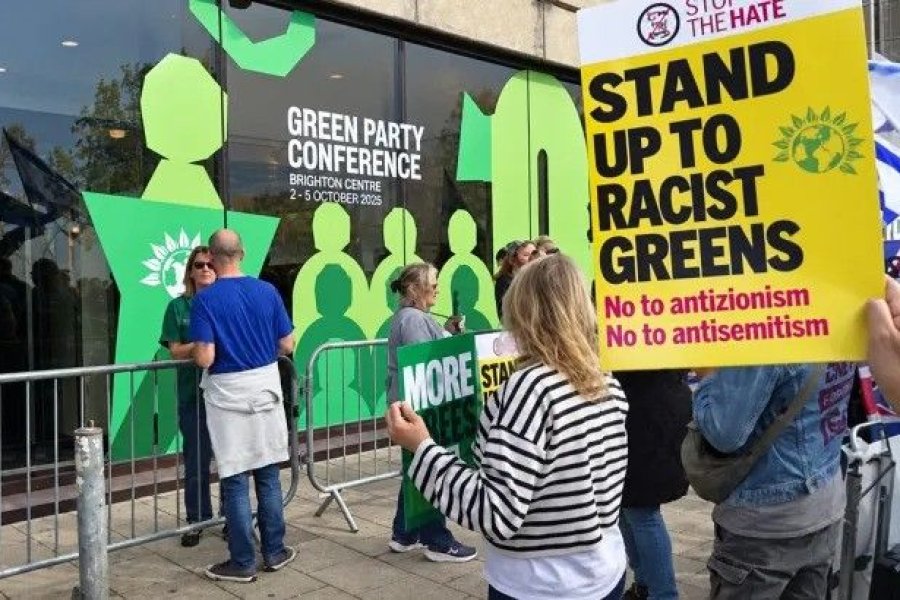
Since the ‘Zionism is racism’ motion passed in Brighton, Green party members have been branded extremists, entryists and infiltrators. El Donnellon argues that the labels say more about the accusers than the accused.
I joined the Green Party three years ago, after a spell outside party politics following my departure from Labour when Starmer became leader. His message to those unhappy with the changes, that the door was open, was one many of us took at its word. I came for the climate, for social justice, for a firm stance on human rights and for a politics that puts people and planet before profit.
I write at the end of a long month, after conference season and the Holborn and St Pancras byelection, where I spent my days on the doorstep. Since the ‘Zionism is Racism’ motion passed in Brighton, I have largely stayed off social media for my wellbeing, but the reaction is impossible to miss – and some of it is stoked by elected representatives who should know better.
Thousands of us are now described as extremists, entryists and infiltrators, an “extreme element” and an “undesirable wing”. Those words spell menace, a malign presence requiring surgical removal and there is even talk of moving the Green party conference to a delegate system, as though the problem were members using the mechanisms available to them.
Who is this menace? We wash and feed elderly people in care homes and sit with them through the night. We test your blood sample for a life-threatening illness. We serve your coffee at six in the morning, perform surgery, teach your children to read, or study for nursing degrees while struggling to keep a roof overhead. Then we give up our evenings and weekends to knock on doors. I want to rehumanise party members who are being cast collectively as malign, with no process and no evidence.
None of this is new and the left should recognise it better than anyone. Every movement that threatened change was first handed a name designed to end the conversation. Labour expelled Aneurin Bevan and Stafford Cripps in 1939 for urging a popular front against fascism and purged Militant in the 1980s as entryists. Eugene Debs ran for US president from prison after an anti-war speech. Orwell watched the anti-Stalinist left denounced as traitors by its own allies in Spain and Rosa Luxemburg, murdered by far-right paramilitaries in 1919, insisted that freedom means freedom for those who think differently.
Martin Luther King Jr: “What kind of extremist will I be?”
The civil rights movement met the same vocabulary. In his 1963 Letter from Birmingham Jail, Martin Luther King Jr answered white clergymen who called the demonstrations the work of outsiders and urged patience. Injustice anywhere, he replied, is a threat to justice everywhere and no one inside an unjust system can be an outsider to it. Dismissed as an extremist, he asked not whether he would be one, but what kind.
A year later, at the Oxford Union, Malcolm X argued that extremism in defence of liberty is no vice and that the word is applied selectively. Those who defend the status quo are called moderate and those who suffer under it and resist are called extreme, he argued. The Black Panthers began by defending black neighbourhoods against police brutality and serving free breakfasts to children. The FBI branded them a threat to national security and COINTELPRO set out to destroy them, a campaign that included the killing of Fred Hampton in 1969.
The pattern holds. The label arrives first and the evidence never does. Tell an audience someone is an extremist and you have told them how to treat that person. The label also falls unevenly. The vocabulary of threat and infiltration has long been attached to racialised people and it does that work whether or not anyone acknowledges it. The silence is part of the problem.
In The Psychosis of Whiteness, Kehinde Andrews argues that racism is sustained less by individual malice than by a structured refusal to see it, a denial that keeps a comfortable picture of the world intact. On that reading, declining to name the racial dimension of who is being cast as a menace is not neutral, it is the mechanism by which the pattern persists. That is why I am particularly concerned about the dehumanisation of global majority members, who are being asked to prove their loyalty in terms that others are rarely held to.
“Extremist” sounds like a measurement but is a judgement and it depends on where the speaker stands. Gramsci understood that those with power make their worldview feel like common sense, so that anything beyond it looks like madness. Chomsky made the same point. The powerful narrow the range of acceptable opinion, let debate rage within it and brand everyone outside as a crank or a danger. Votes for women, the weekend and the NHS, won by the suffragettes, the trade unions and Bevan, were all called extreme and are now common sense. If I am an extremist in their eyes, then by the same logic they are extremists in mine, a symmetry the accusers never consider.
When a label becomes a slur
If the word carries any moral content, it must be measured against something and the measure is rarely stated. Is the extremist the person who objects to what they believe is a genocide, or the person who condemns it in words while materially permitting it to continue? I believe the destruction of Palestinian lives amounts to genocide, which makes my objection the proportionate response and indifference the extreme position. Whatever one’s view, that question deserves an answer before the label is applied. A word pinned on those who raise the alarm and withheld from those who look away is no longer describing anything. It functions as a slur.
Language spreads much as disease does. A term begins with a few carriers, usually people with power and a platform and is repeated without scrutiny until it needs no evidence. Public health teaches that you halt a spread by tracing it to its source, asking who benefits and looking at who it infects. “Entryist” and “infiltrator” are crueller still. Born of the Trotskyist “French Turn” and thrown at Liverpool's Militant, they imply a secret agent, a Trojan horse inside the gates. They cannot be disproved, because the accused can never prove what is in their heart, which is precisely what makes them useful.
This suspicion predates the motion. Parts of the Green party said publicly that they did not welcome newer members long before Zack Polanski and Mothin Ali were elected leader and deputy leader. The result is a membership that feels watched, treated as guests on probation who must prove their loyalty repeatedly while others are never asked. That is in direct contradiction of the party’s own code of conduct, which asks members to “assume the best” of one another.
Branding fellow members infiltrators, without evidence, does the opposite. It assumes the worst and leaves the accused to disprove it. For some of us, this is the second time in a decade, having lived through the Corbyn years and watched the same playbook run. A party that calls itself anti-racist should not need a meltdown to avoid a conversation about racism. Andrews’s point about denial applies here. It is a structure, not a lapse.
A democratic party is shaped from the ground up and when its members’ beliefs shift, it shifts with them. That is not a hostile takeover, it is the point of having members. To be made to feel near-criminal for voting on a motion an elected body ruled in order is hard to fathom. We are called extremists for wanting substantive change over performative tokenism and we are often the people hardest hit by government policy. For many, lives do depend on that change.
What has played out in public is the party’s haves and have-nots. Those with platforms, titles and the ear of the press and those who deliver the leaflets and absorb the consequences. One fact goes unmentioned in nearly all the reporting. The ‘Zionism is racism’ motion’s author, Lubna Speitan, has lost more than 50 members of her family in Palestine. Whatever anyone thinks of the motion, she deserves basic human consideration rather than reduction to a headline.
The Green party leadership, which appears to retain the faith of the vast bulk of the membership, has shown real bravery under hostile fire, yet has been left exposed by peers who should stand with them. Last Saturday the Telegraph published a Patrick Blower cartoon captioned “Eat your Greens”, showing deputy leader Mothin Ali, wrapped in a Palestinian flag and wearing a ‘Zionism is racism’ badge, about to eat Polanski’s severed head, with Polanski drawn with an exaggerated hooked nose. Muslim Greens and Jewish Greens jointly condemned it as drawing on Islamophobic and antisemitic tropes. A Telegraph columnist defended the paper by calling Ali an Islamist and the complaint chutzpah, contradicting himself in a single breath.
Martin Luther King Jr asked not whether we would be extremists, but what kind. It is a question the Green party has yet to answer – and one its accusers have never asked of themselves.
Left Field · Contributor
El Donnellon
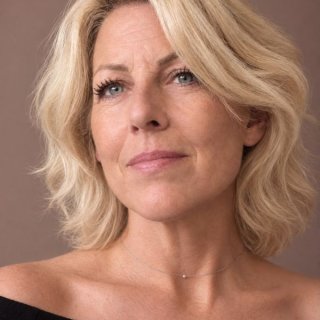
El (Elaine) Donnellon is the daughter of an Irish immigrant, Liverpool born and raised and now an adopted Londoner. Fiercely working class, she is an intersectional socialist who does class politics and is also a mother, writer, activist, charity and NHS worker.
Popular This Week


More to explore


Tell Google you want to see more from us - set Left Field as a preferred source in your search results.

