Piddington: grassroots disaster nationalism has arrived in middle England
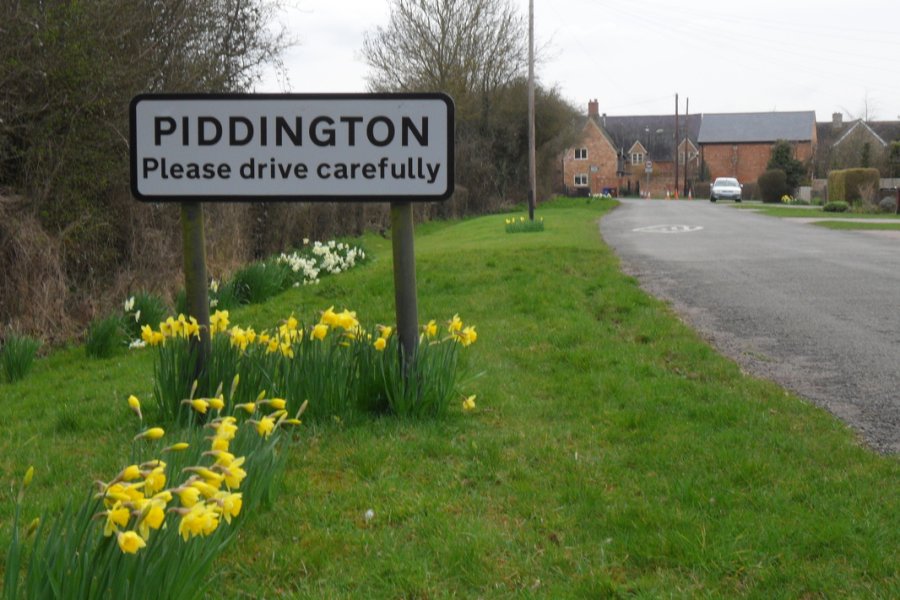
Only 285 villagers voted – but the breathless media coverage shows disaster nationalism has found a comfortable home in wealthy, middle England.
If you had turned on the news earlier this week, you would have seen BBC Breakfast and ITV’s Good Morning Britain’s bemused coverage of Piddington’s ‘vote’ to ‘leave’ the UK. In the Oxfordshire village, 285 people voted to secede from the nation because they didn’t want refugees housed nearby. The coverage of this publicity stunt is a marker – it shows that disaster nationalism has arrived as a grassroots political force in middle England.
What do we mean by disaster nationalism? Richard Seymour’s Disaster Nationalism: The Downfall of Liberal Civilization argues that today's far right is historically distinct to fascism – we are not living in the 1930s, we are in 2026 and the political forces of our time need to be understood specifically.
Disaster nationalism pits the imagined community of the nation against the minoritised and the imagined outsider. But it is within the context of living on a planet hurtling towards climate catastrophe. The politics of Reform’s leaders, the far-right riots, ICE and Modi-led pogroms are all happening with an eye on the future – a battle to ensure that Muslims do not have access to ‘our’ resources. That they are left to die in the heat, in the famines and in the wars caused by the west.
Piddington’s vote is not significant. A non-party-affiliated parish councillor, a retired teacher, coordinated the ‘referendum’. It in effect asked a few hundred people to endorse one message: refugees are not welcome here. And they did. People who know Oxfordshire’s local politics will know that anti-Gypsy, Romani and Traveller racism is a mainstay of parish councils.
But what is significant is the supine coverage of the media. I have never seen coverage of an industrial ballot of 300 people get such national coverage. On the odd occasion where thousands upon thousands of workers have voted for strike action, it has made the national news. But how has it been treated? We have all seen democratically agreed strike action treated as a threat to the nation with allegations that trade unions are blackmailing the government, disrupting the country and letting communities down. To say nothing of trade union leaders being grilled live on TV.
But a tiny vote of a wealthy community in a wealthy country to turn their backs on the starving, hungry and injured from abroad, is treated uncritically. When interviewed by BBC Newsnight, villagers talked about enlisting in self-defence classes and of being outnumbered. It's a localised version of the great replacement theory. And the numbers only sharpen how disproportionate that fear is. The plan would house up to 1,256 asylum seekers on a disused military site half a mile away – in accommodation the government itself describes as designed to be largely self-sufficient, with residents free to come and go rather than being detained. None of that has calmed the panic.
The media doesn’t even have the wit to ask the basic question – don’t these people love their country? It’s there in black and white. They don’t even want to be in this country. They hate the idea of people fleeing from disaster living near them more than they love their country.
And these aren’t disaffected, working-class communities. These are the over-privileged and those who have turned their backs on most of the working-class struggles of the last 50 years.
Compare that to how Left Field readers have watched their own strikes covered – as blackmail, as a national threat, as something to be shut down. A parish vote to keep out the desperate gets a sympathetic hearing from two breakfast sofas. Trade unionists fighting for pay don’t. That’s not an accident of coverage. It’s a choice about whose grievances count.
Left Field · Contributor
Andrew Hedges

Popular This Week


More to explore


Tell Google you want to see more from us - set Left Field as a preferred source in your search results.

