How Murdoch’s Sun started the race to the bottom
By Andy Walker
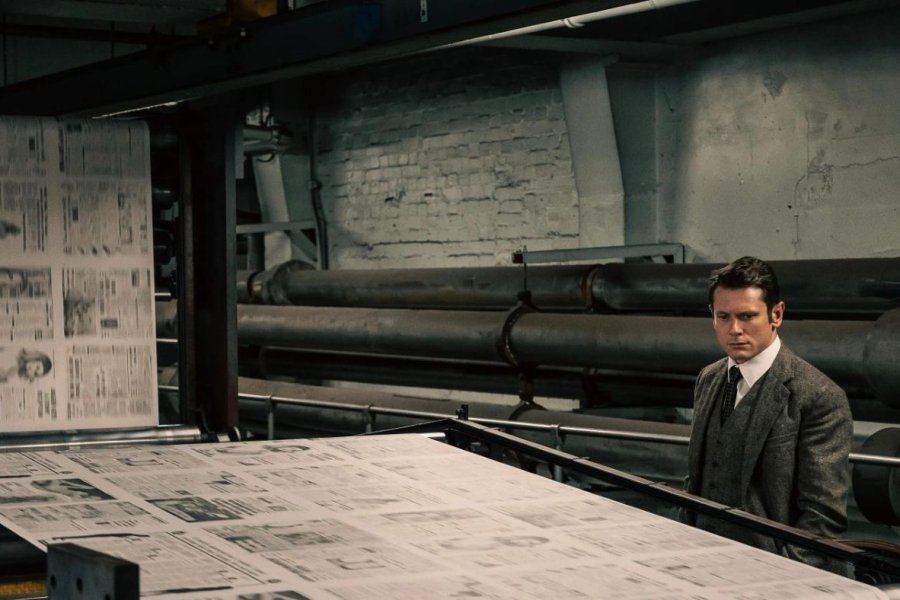
Danny Boyle’s new film Ink charts how Rupert Murdoch and Larry Lamb turned an ailing broadsheet into Britain’s most notorious tabloid and shows the race to the bottom we are still living with.
Danny Boyle’s latest film, Ink, is a must-see. It tells how Rupert Murdoch bought the ailing Sun in 1969 and hired tough Yorkshire newspaperman Larry Lamb to turn it into a raucous, vulgar and much-reviled tabloid.
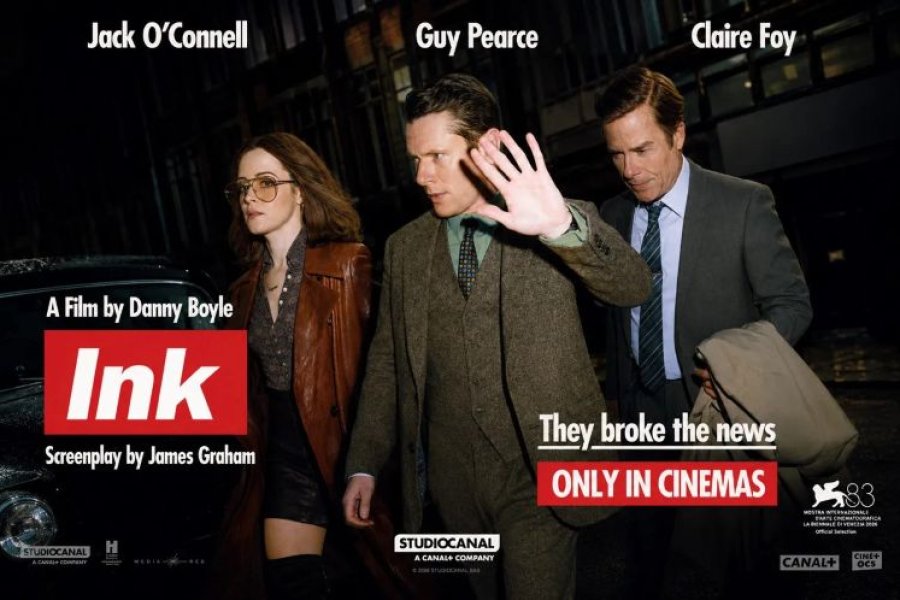
Guy Pearce plays Murdoch and Jack O’Connell plays Lamb. James Graham (Dear England, Sherwood, Brexit: The Uncivil War) adapted the screenplay from his own 2017 stage play and the film was shown at this year’s London Film Festival.
The story opens in October 1969, with Australian businessman Murdoch negotiating to buy the failing paper from Daily Mirror owner IPC. He approaches Lamb, then the Daily Mail’s northern editor, to edit the relaunched title. Lamb is a former Mirror sub-editor who is frustrated at his stalled career, which he blames on his working-class background. He reluctantly says yes.
Ink pulls no punches in charting the rise and rise of The Sun as it races to the bottom in pursuit of circulation. With Murdoch’s encouragement, Lamb drags the paper in a populist direction, adding frank talk about sex, a television section and weekly giveaways.
Left Field readers will know The Sun’s record well, from its crimes against journalism to the unlawful information-gathering its publisher has since apologised for in court. The film is a timely reminder of how that culture took root. As Murdoch and Lamb chase their rivals in the circulation war, it is clear that sales and revenue are the only things that matter to the owner.
That is never starker than in the kidnapping of Muriel McKay, wife of Murdoch executive Alick McKay, by men who mistook her for Murdoch’s wife, Anna. The chaotic and incompetent abduction ended in McKay’s death and her body was never found. Lamb insists on covering the story and publishing the ransom notes, defying his staff, union leaders and Murdoch himself. Two brothers were later convicted of her kidnap and murder. The Sun was widely condemned for its coverage of the tragedy, but its sales surged.
Boyle has said the film was one he had to make. “A script by James Graham I felt compelled and privileged to make. 1969 was the year we first walked on the moon – and the year Rupert Murdoch and Larry Lamb launched a newspaper that was to change the world far more,” he said. “Long before Fox News, clickbait, and Truth Social; decades before Twitter, Facebook, Google and OnlyFans, these two men created a new tabloid which against all the odds became the biggest selling newspaper in the world.”
As the first anniversary of the relaunch approaches, sales are still trailing the Mirror’s. Lamb asks a model to pose topless for a photo to run on page three and after some discussion she agrees. In the film, the anniversary issue sparks public outrage, damages the model’s reputation and infuriates Murdoch. It also outsells the Mirror.
Claire Foy co-stars in the film as Jules Davies, a senior journalist and editor at The Sun. Initially supportive of the paper’s direction, she ends up in opposition as a result of the page three controversy but proves unable to stem the paper’s tide of sexism and misogyny.
Murdoch lets page three continue, despite his own disapproval and Lamb’s reservations. Over dinner, he suggests The Sun should start courting the new Conservative government, because he is confident it can sway public opinion. He also tells Lamb of his plan to move the paper from Fleet Street to Wapping. When that move finally came in 1986, it smashed the print unions and became one of the defining battles of the Thatcher years. Murdoch’s tabloid rag cheered every step.
The film is fast paced, tightly directed and highly watchable. Like much of Boyle’s work, it is uncompromising and often in your face. Pearce and O’Connell are outstanding in the lead roles, Pearce portraying a particularly menacing Rupert Murdoch and with Graham adapting his own play, the film stays fairly close to the stage original.
Ink shows how Britain’s most notorious tabloid set the tone for a press culture that has survived phone hacking and sleaze and endures today. It is also an indictment of tabloid sensationalism. The film strongly implies that The Sun and the climate it created helped sow the seeds of Fox News, Trumpism and today’s social media manosphere.
Ink opens in UK and Irish cinemas on 8 January 2027.

Left Field · Contributor
Andy Walker

Andy Walker is the founder and editorial director of Left Field. He is a journalist and the secretary of the Newcastle branch of the National Union of Journalists.
Popular This Week

More to explore



Tell Google you want to see more from us - set Left Field as a preferred source in your search results.

