
Destitution crisis “becoming entrenched” as 3.8 million go without basics
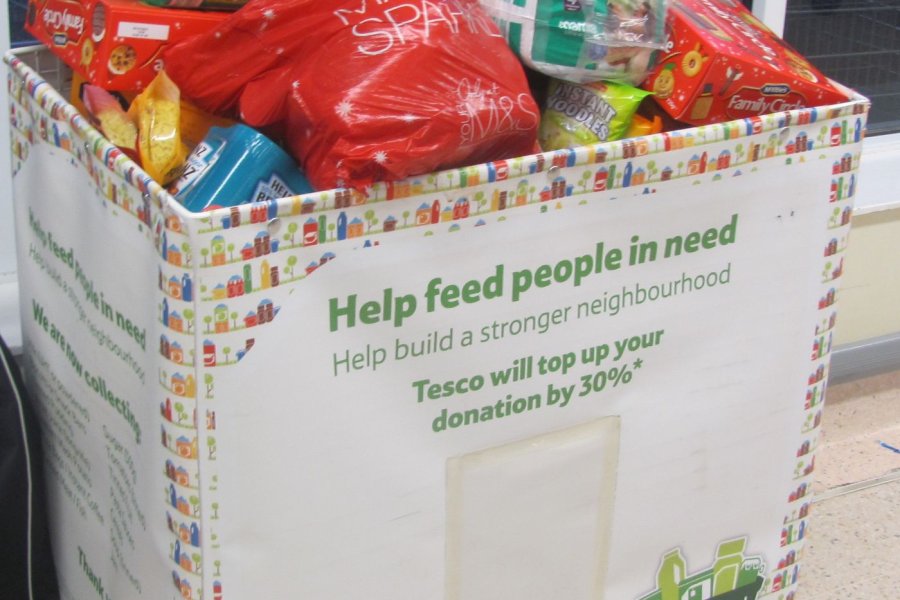
Wikimedia Commons / Chris Reynolds
Almost one million children were among those unable to afford food, heating and toiletries last year, as new research warns that support services are buckling under sustained demand.
Around 3.8 million people in the UK were destitute in 2025, according to new research. They could not afford the basics needed to eat, stay warm and dry, and keep clean.
Almost one million of them were children.
The figure has stayed at the record level first reached in 2022. That year, the number of people in destitution was almost two-and-a-half times what it had been in 2017. The study warns that this extreme hardship now risks “becoming the norm”. It was funded by the Joseph Rowntree Foundation (JRF) and carried out by Heriot-Watt University with the research agency Verian.
Researchers found that people increasingly depend on food banks and other emergency services for basic needs over long periods. These services were meant to provide short-term crisis help.
Professor Suzanne Fitzpatrick, of Heriot-Watt’s Institute for Social Policy, Housing, Equalities Research (I-SPHERE), said destitution was becoming “a more persistent experience”.
“We are no longer looking at a temporary spike in hardship,” she said. "Millions of people remain unable to afford the basic necessities needed to live and there is something profoundly wrong when that becomes an enduring feature of life for so many in the UK.”
Disabled people left without support
The findings, outlined in the Destitution in the UK 2026 report, cut against the political narrative on disability benefits. Disabled people are heavily overrepresented among the destitute. Of the general population, 46% report a disability or long-term health condition. Among people who are destitute, that figure rises to 61%, even though the destitute population tends to be younger.
Public debate has centred on whether too many people claim disability benefits. But more than a third (37%) of destitute people whose condition limits their activities “a lot” were not receiving disability benefits at all.
Single working-age adults, people from minoritised ethnic communities and migrants are also especially likely to be destitute. Migrants now make up 32% of the destitute population, up from 25% in 2019. The study counts anyone born outside the UK or the Republic of Ireland as a migrant, which includes many people who have lived and worked here for years.
London hit hardest
Greater London has the highest rate of destitution. Around 2% of households there were destitute during the survey week, almost twice the rate in the south-west, the least affected region. In Newham, the worst-hit local authority, the rate was more than six times that of the least affected area.
The north west and north east also have above-average rates. Wales, Scotland and Northern Ireland all have lower rates than England. Wales is now marginally below Scotland, while Northern Ireland's rate is somewhat higher.
Calls for an Essentials Guarantee
JRF is calling on the government to tackle the root causes of destitution. Its central demand is an Essentials Guarantee within Universal Credit. This would set a legal minimum level of support, based on the cost of food, utilities and vital household items. Deductions such as debt repayments to government or the benefit cap could not push support below that level.
The foundation also wants everyone who needs it to have access to emergency financial assistance. It is urging ministers to reject policies that drive destitution among migrants.
Julian Hartley, JRF's group chief executive, said the government was “absolutely right” to act on rough sleeping, but warned that it was “just the tip of the iceberg”.
“Far too many people are going without life's most basic necessities, while support services are buckling under the weight of need,” he said. “Behind these stark figures are real people who don’t have what they need to survive – food, shelter, basic toiletries and clothing.”
The research included a survey of 4,884 people using 120 crisis services in 18 locations across the UK, carried out between October and December 2025. Researchers also interviewed 31 destitute migrants in spring 2026 and analysed more than 40 national datasets to produce UK-wide estimates.

Left Field · Contributor
Left Field news desk

Left Field’s news desk covers breaking stories and developments across UK and world politics, housing, and public services – reported fast and reported straight.
Popular This Week




More to explore




Tell Google you want to see more from us - set Left Field as a preferred source in your search results.

