Before we argue about how much tax, ask what it’s for

Rotherham NHS Foundation Trust
As John Healey prepares his first budget with the biggest taxes already off the table, Daniel Emmett-Gulliver argues that the real debate isn’t how much we pay – it’s what our taxes should deliver.
With days to go before John Healey’s first budget, the chancellor has reportedly ruled out raising capital gains tax to match income tax. Labour’s 2024 manifesto had already taken income tax, national insurance and VAT off the table. If the reports are right, another lever has gone.
Every time, the argument runs the same way. In or out. Up or down. Should we tax people until the pips squeak? Or learn to live within our means? Imagine asking people whether they want to pay more tax or less. Most would say less, which is hardly surprising. Who wouldn’t want to keep more of their own money?
Now imagine asking people a different question. What if we could have better public services, better value for money and more opportunities for the next generation by using the resources we already have more effectively? What if government could demonstrate that it was living within its means, spending wisely, and delivering on its promises? Would people give a different answer?
Taxation is one of those subjects that seems to divide people into opposing camps. One side wants to cut taxes. Another argues that public services need more money. Both have a point. But is this really the debate we should be having?
Economics is not a popularity contest. Or at least, it shouldn’t be. It should not be reduced to a running commentary on who is up and who is down, which politician has won the latest zero-sum game, or which tax has become too unpopular to touch.
The debate has to be about more than pennies and pounds. It has to start with a more fundamental question. What is taxation for? Taxation is a means, not an end. Or at least, it should be. But perhaps even that is unintentionally controversial. Because the moment we start talking about taxation, we often jump straight to how much we should pay, which taxes should rise, and which should fall.
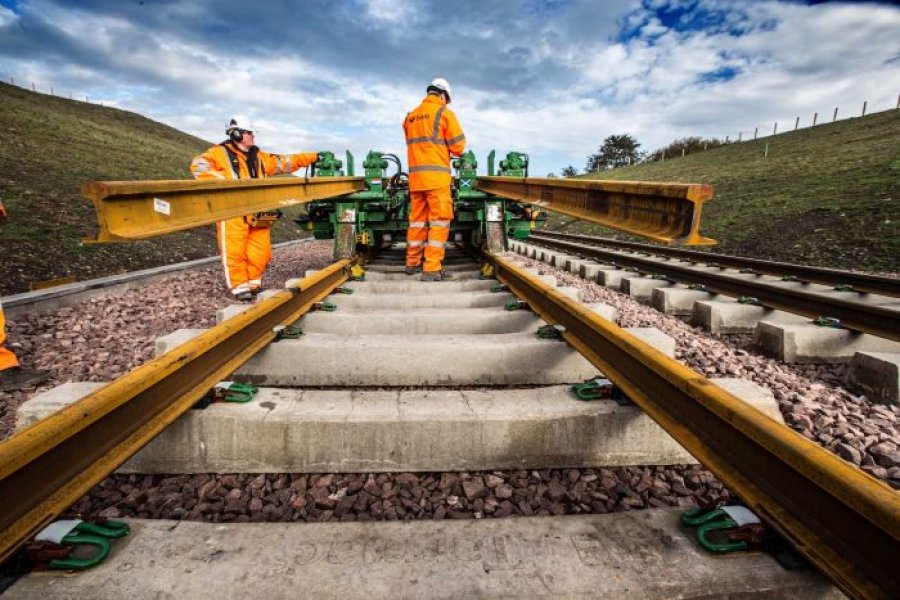
We argue about the size of the bill before agreeing what the money is for. Perhaps that is where we go wrong. Taxation pays for the services we rely on. It funds infrastructure, supports public institutions, and helps create the conditions in which people and businesses can thrive rather than just survive. But that does not mean every tax is fair. Nor does it mean every pound government spends is well spent. We should be able to question both.
Network Rail
It’s not about how much government should take, it’s what we want our contribution to deliver
Taxation should be judged by what it helps us achieve, how fairly the burden is shared, and whether the money is being used effectively. The question is not simply how much government should take but also what we want our contribution to deliver. The objective cannot simply be to raise as much tax as possible. Equally, cutting taxes without considering the consequences is not a plan for prosperity.
As Liz Truss discovered in 2022, economic credibility matters. Living within our means is not just about cutting spending. It is about making choices. What matters most? What can we afford? What will deliver the greatest benefit? And what are we prepared to give up to pay for something else?
There is no magic money tree. Nor is there a magic formula that allows us to promise lower taxes, better services, and unlimited investment without confronting the costs. We need to be honest about that. But we also need to be honest about the difference between spending more and achieving more.
People do not judge government solely by the amount of tax they pay. They also judge it by what happens around them. Can they get a timely appointment with a doctor? Are their local services working? Are roads and public spaces maintained? Do they believe their children will have opportunities to build a better life?
Taxation cannot solve every problem. But the relationship between what people contribute and what society delivers matters. And that relationship is built on trust, which cannot be demanded. It has to be earned. Which brings us full circle.
Should we tax people until the pips squeak, or learn to live within our means better? Perhaps the answer starts by asking what we want our taxes to achieve, what we can reasonably afford and how we can make every pound count. Because the real measure of economic policy is not how much money government raises or how much it promises to save.
It is whether the choices we make help people live better, now and in the future. That is what taxation should be about.
Left Field · Contributor
Daniel Emmett-Gulliver
Daniel Emmett-Gulliver is a native Londoner and adoptive Welshman, who is passionate about politics, fairness and equality.
Popular This Week


More to explore


Tell Google you want to see more from us - set Left Field as a preferred source in your search results.

