Don’t tell angry people to calm down – ask what they’ve been trying to say
By El Donnellon

Tim Pierce / Creative Commons
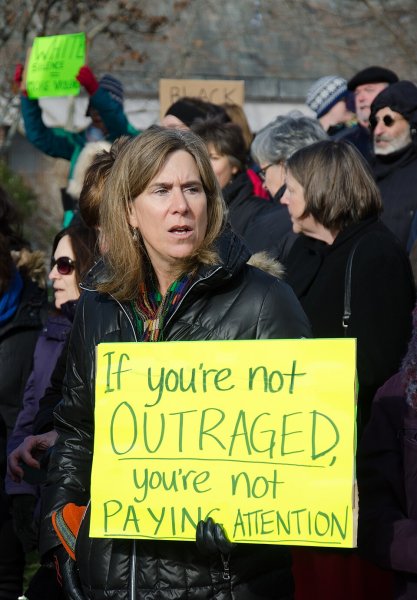
Working-class anger is rarely irrational. It is what years of asking politely and being ignored looks like – and the left should give it somewhere to go, argues El Donnellon.
You don’t have to be working class to be angry, but it helps. Not because anger belongs to the working class – it is a raw and common human emotion that crosses every social, economic and cultural boundary. Injustice, abuse, neglect and exclusion can provoke rage in anyone.
But there is something about repeatedly going without that changes the texture of anger. It makes it more likely to become a constant presence, or for someone to grow quick to anger. Yet nobody wakes up one morning and chooses to be angry. No one, to my knowledge, is born angry.
Anger can become a learned response to repeated disappointment, especially when experience has taught someone that being calm, reasonable or polite does not get them heard. It is often the accumulation of unmet needs, sustained frustration and powerlessness. It is what happens when you keep asking for something basic, only to have your needs denied, your concerns minimised and your experiences treated as though they do not matter.
People who have lived with disadvantage often have an extraordinarily sophisticated understanding of the systems that have failed them. They know where the gaps are because they have fallen through them. Sometimes those gaps are not gaps at all, but chasms.
So sometimes that anger is appropriate – even righteous.
Anger is energy
Anger on its own, unharnessed, does not achieve very much. But anger is energy. It tells us something is wrong, alerts us to unfairness and gives us the motivation to challenge what has become intolerable.
Anger is like fire. Fanned and fed with fuel, it becomes an inferno that causes colossal damage. Channelled well, it provides heat, light and momentum.
If anger is repeatedly suppressed, dismissed or ridiculed, it turns corrosive. It turns inwards, or spills over onto those nearby. Given time, it hardens into resentment, hopelessness and a loop of destructive behaviour. The answer is not to tell angry people to calm down, or to threaten them with exclusion.
Communities need spaces where they can speak and be actively heard. They need a genuine say in the decisions that affect their lives – not tokenistic gestures, but real influence over what happens next. As the saying goes: nothing about us without us.
That is where anger becomes powerful. Combined with knowledge, organisation, solidarity and purpose, it becomes advocacy, campaigning, community action and political engagement. It becomes the determination to change something rather than simply endure it.
Passion is not hostility
Passion is often mistaken for anger. And anger rarely appears alone. Grief, fear, exhaustion, humiliation and desperation often sit beside it.
When something matters enormously to us, our voices get louder, our body language more animated and our emotions more visible. That is especially true in political spaces, where activists are fighting over the basics – shelter, food, healthcare, education and protection from discrimination. What one person reads as anger may, to the person feeling it, be profound concern for an issue that matters that much. And when there are no obvious solutions or vehicles for change, the enormity of it can be overwhelming.
None of this means approving of every expression of anger. Anger gives nobody permission to abuse, threaten or harm another person. Nor should working-class people be romanticised as more authentic because they get angry. But neither should anger disqualify anyone from being taken seriously.
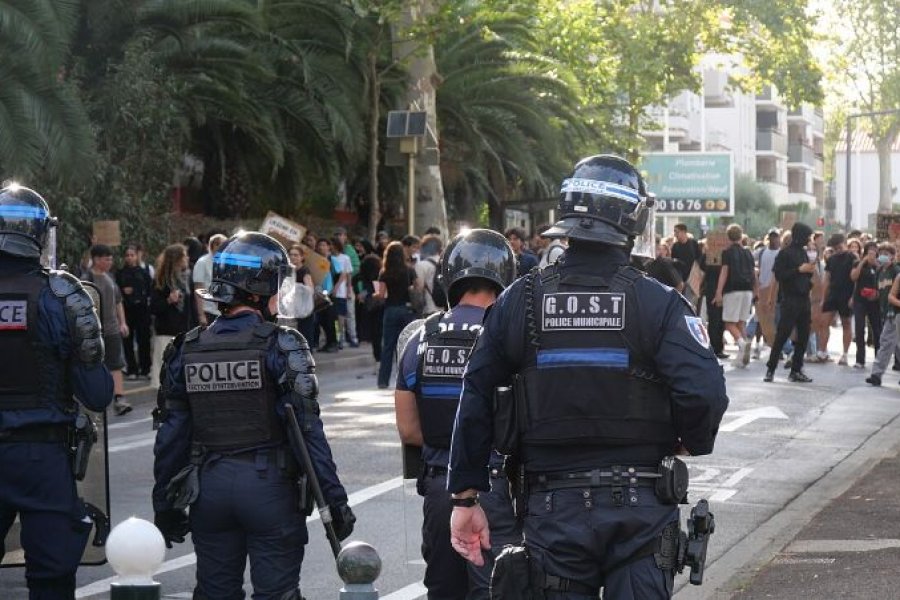
Anger can be hard to witness, even when it is not aimed at us. It can be frightening. We wonder where it might go, and it can trigger our own trauma responses, especially if we are missing the context. Yet, if we are honest, we are perfectly comfortable with anger on the big screen.
Aurelio Cárdenas / Wikimedia Commons
Who gets to be heard?
There is something profoundly undemocratic about listening only to people who can express their grievances in language that makes everyone else comfortable. If democracy is supposed to give people a voice, that voice cannot belong only to those who have mastered the vocabulary, confidence and social codes the institutions expect. Not everyone has those skills – and even those who do can lose them after enough pushing.
Often, the person now shouting has spent years asking politely. The person who seems unreasonable has been reasonably asking for the same thing for far too long. Everyone has a breaking point.
So, we should get better at separating the emotion from the message. Rather than fearing or dismissing anger, we should be curious about it. What produced it? What need has gone unmet? What barrier has this person hit? What right has been denied? What have they already tried, and what would it take to turn that anger into something useful?
When people feel truly heard and are given a real part in finding solutions, something changes. “Nobody listens to people like me” can become “I am not alone in this – there are many of us, and together we can do something about it.”
Validation is not agreement. Listening is not surrendering to every demand. Understanding is not excusing harmful behaviour. But without recognising people’s lived realities, it is very hard to build trust. And without trust, collective action becomes much harder.
Somewhere to take it
If progress means movement in the right direction, progressive politics should pay attention to the emotional lives of the people it claims to represent. Class consciousness is not just about income, employment or background. It is also about understanding what prolonged insecurity, exclusion and powerlessness do to people.
If we want people to move from anger to action, we have to give them somewhere to take it. We need spaces where people can speak freely and be heard, and structures through which grievances become demands, demands become campaigns and campaigns become real change.
Anger does not have to be the end of the conversation. It can be the beginning of one.
That is the real challenge. Not asking people to be less angry but asking ourselves whether we have built enough ways for that anger to be channelled into change.
When people have been ignored for too long, the question should not be: “Why are they so angry?” It should be: “What have they been trying to tell us, and what would it take to change the conditions that made them angry?”
As Martin Luther King Jr put it: “A riot is the language of the unheard.”
Left Field · Contributor
El Donnellon

El (Elaine) Donnellon is the daughter of an Irish immigrant, Liverpool born and raised and now an adopted Londoner. Fiercely working class, she is an intersectional socialist who does class politics and is also a mother, writer, activist, charity and NHS worker.
Popular This Week



More to explore



Tell Google you want to see more from us - set Left Field as a preferred source in your search results.

