A hidden gem of the political podcast world

Andrew Hedges reviews Culture, Power, Politics, the podcast in which Jeremy Gilbert and Alan Finlayson dissect Andy Burnham’s leadership speech – and find a prime minister still fighting Labour’s battles from the 1990s.
Culture, Power, Politics is a hidden gem of the political podcast world. Jeremy Gilbert, professor of cultural and political theory at the University of East London and regular guest Alan Finlayson, professor of political and social theory at the University of East Anglia, provide lively, thought-provoking commentary on the latest political goings-on. The podcast promises “world-class analysis of contemporary politics and culture” for an age of crisis – and largely delivers.
Their most recent episode, Burnham Begins, is a useful antidote to knee-jerk social-media pessimism about the new prime minister. Optimism isn’t the right word for their analysis, though – call it a rigorous pessimism. It’s worth unpacking the key points.
Recognising the era of neoliberalism
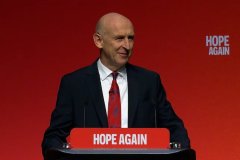
Gilbert and Finlayson note that in his acceptance speech as Labour leader, Burnham acknowledged 40 years of decline in Britain and named the culprit directly: neoliberalism. That’s a marked shift from Starmer, Blair, and – as Gilbert points out – Corbyn too. Where the latter fixated on 2010s austerity, Burnham’s framing of decline speaks directly to Britain's post-industrial regions.
But Finlayson, an expert in political speech analysis, presses further: what exactly is Burnham’s analysis? Is it simply that these industries were good and neoliberalism took them away – and that ending neoliberalism means bringing industrial capitalism back? Can Burnham actually grapple with where the economy and society stand today? This framing, Finlayson notes, will play well with the Blue Labour lobby.
I’d go further. Burnham’s unequivocal support for devolution via metro mayors is an early tell that he doesn’t share the left’s understanding of neoliberalism at all. There’s a strong case that metro mayors are neoliberal governance at its purest – a role handed money by central government purely to attract private investment, whether that’s favourable loans to Mancunian property developers or freeports in Teesside. It casts the state as facilitator to the private sector, a far cry from the teeth of 1980s local government, when Liverpool or London councils could mount a serious threat to Thatcher’s administration.
Movement building?
Finlayson also flags that Burnham’s speeches lack any call to action – his audience is constructed as passive, not active. Gilbert reads this as a product of Burnham’s thin roots in the wider labour movement and trade unions.
Burnham’s vision for the future remains amorphous. The obvious move on the economy would be a green industrial strategy, but he appears hamstrung already by two major unions, GMB and Unite, both lobbying for continued fossil fuel extraction to protect members’ jobs.
It’s worth noting that Unite general secretary Sharon Graham’s biggest intervention in Labour’s internal battles to date was blocking Ed Miliband from the chancellorship in favour of John Healey. Left Field readers should also know that there’s a Unite general secretary ballot open right now – you can vote her out!
Labour history
David Blunkett, Margaret Beckett and Neil Kinnock were all name-checked and warmly praised in Andy Burnham’s acceptance speech. Gilbert argues that this pairing – neoliberalism as diagnosis, early-90s Labour figures as touchstones – amounts to a full repudiation of Blairism by the party’s membership.
In Gilbert’s reading, the Burnham project is an attempt to reverse the historic wound of Labour's 1992 election defeat: a project of Kinnockites and Brownites, its factional lineage running through the old Labour right and the late-80s, early-90s soft left.
Gilbert and Finlayson’s broader verdict is damning in its simplicity – that Burnham’s acceptance speech gives an account of the past, not a vision of the future. Where he goes from here is still an open question.
Click here to find out more about the Culture, Power, Politics podcast.
Left Field · Contributor
Andrew Hedges

Popular This Week


More to explore


Tell Google you want to see more from us - set Left Field as a preferred source in your search results.

