
Arms export system ‘rigged’ to keep weapons flowing to Saudi Arabia and Israel, says report
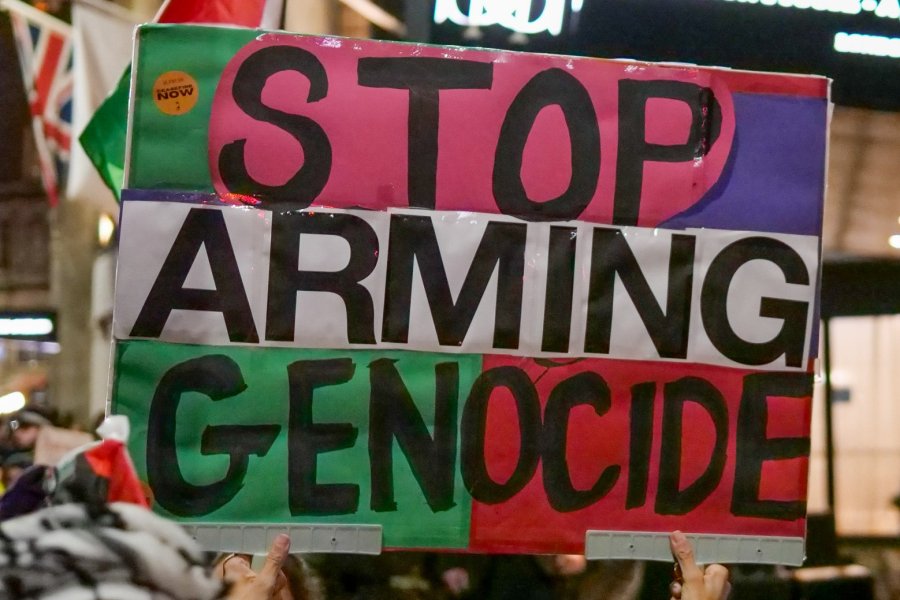
A new CAAT report concludes that real change will require a radical uprooting of the systems of power and interest behind the arms trade.
Campaign Against Arms Trade says successive governments have sidestepped their own licensing rules and international law and the Burnham government shows no sign of changing course.
The UK’s arms export system is broken and rigged to reach predetermined conclusions, according to a new report from Campaign Against Arms Trade.
Dead Letter – How the UK government’s arms export policies have eviscerated international humanitarian law examines two cases: the Saudi-led bombing of Yemen between 2015 and 2022, and Israel's war on Gaza, which CAAT describes as genocide. It argues that successive governments went to extraordinary lengths to get around domestic licensing criteria and international law. They did so despite legal challenges and overwhelming evidence that British-made equipment risked being used in war crimes.
The report’s launch came as the government admitted its new double-lock on arms sales to Israel will not lead to any further licences being suspended. It also follows Andy Burnham’s announcement that Britain is supporting Saudi Arabia’s fresh wave of airstrikes on Yemen. CAAT says both show the new Labour government has no intention of changing course.
Saudi Arabia is one of the UK’s most important arms customers. The UK licensed £7.1bn of military equipment to the kingdom between the start of the war in 2015 and the 2022 ceasefire. BAE Systems, the prime contractor, took £49bn in revenue from Saudi deals between 2007 and 2025, according to its annual reports.
The report describes the relationship as a core part of BAE’s business model and finds no sign of change. Newly released figures show the government approved £464.8m of weapons exports to Saudi Arabia in the first quarter of this year. Most of this was air-to-surface weapons.
The Saudi-led campaign began on 25 March 2015 with the aim of ending Houthi control of Yemen. It failed. According to the Yemen Data Project, the coalition carried out more than 25,000 airstrikes before the ceasefire on 1 April 2022. Almost 9,000 people were killed in directly targeted attacks on civilians. Homes, hospitals, schools, mosques, weddings and funerals were all hit.
Bombing of Yemen created “world’s worst humanitarian crisis”
The bombing was combined with a land, sea and air blockade. Together they created what the UN then called the world’s worst humanitarian crisis, with 2.3 million children under five acutely malnourished by early 2022. The UN estimated that the war had caused 377,000 deaths, directly or indirectly.
When the report was written, Israel had killed at least 73,789 Palestinians in Gaza according to the Gaza health ministry, more than 20,000 of them children. CAAT says indirect deaths are not yet known but are likely to run into the hundreds of thousands. These include deaths from hunger, disease and the destruction of Gaza’s health system.
In January 2024 the International Court of Justice found that Palestinians in Gaza had plausible rights to protection under the Genocide Convention and ordered Israel to prevent genocidal acts. In June 2024 the government’s own Export Control Joint Unit found it “uncontentious” that conduct which could in principle meet the physical element of genocide was continuing in Gaza.
CAAT says successive governments ignored their own licensing criteria regardless. When Keir Starmer’s government suspended some licences to Israel, it exempted components for the F-35 combat aircraft, the most lucrative part of the UK’s arms trade with Israel. CAAT says this made the suspension almost meaningless.
The report sets out recommendations for government but acknowledges they may seem superfluous given ministers’ wilful blindness. It concludes that real change will require a radical uprooting of the systems of power and interest behind the trade.
Katie Fallon, CAAT’s advocacy manager and the report’s author, said: “The structure and systems which have allowed UK arms exports to be complicit in the most grave of international crimes have been developed over decades.
“No one can say they didn't know. A just and peaceful future is only possible if we reckon with the stark reality of our contribution to these crimes and the vested interests they support.”
Read the full report here on CAAT’s website.
https://caat.org.uk/app/uploads/2026/09/CAAT-Dead-Letter-v4-download.pdf
Left Field · Contributor
Left Field reporters

Left Field's collective of writers have contributed to this article.
Popular This Week



More to explore



Tell Google you want to see more from us - set Left Field as a preferred source in your search results.

