What’s left of Burnham’s promise?
By Andy Walker
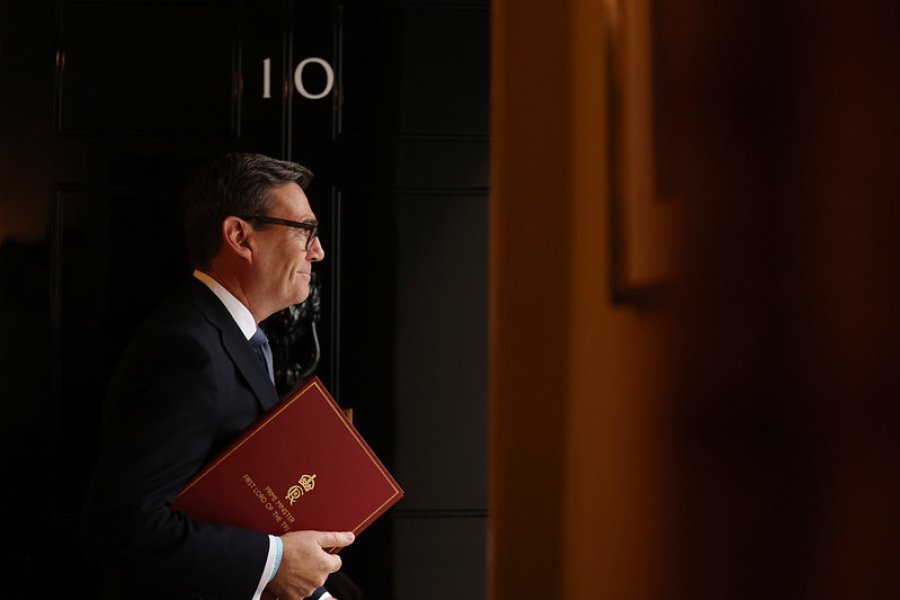
Labour’s upcoming conference in Liverpool will be Andy Burnham’s first big test of his premiership, as he faces his party’s members for the first time since becoming prime minister. (Photo: Number 10 flickr)
Three months into his premiership, Andy Burnham’s cost-of-living wins amount to a few pounds a week – while the policy he once championed loudest, rent controls, has been ruled out by his own government. The party’s Liverpool conference is where that gap gets harder to ignore.
Andy Burnham arrives in Liverpool this coming weekend for his first conference as Labour leader carrying two things. A promise to end “trickle-down economics” and “neoliberalism”, and a record that so far amounts to a handful of modest cost-of-living tweaks and one very public retreat on the policy he used to champion most.
Let’s start with what's actually landed. Since taking office, Burnham’s government has cut VAT on domestic electricity bills from 5% to 0% from October, worth around £45 a year to the average household, amounting to a little over 86p a week. It gave children aged five to 15 free bus travel for the month of August, backed by £100m. And it’s promised to cut the single bus fare cap in England outside London from £3 back to £2, though that doesn’t land until January 2027. All useful, all real money in people’s pockets – and all modest enough that a bad month of energy prices could wipe the gains out before anyone notices they have arrived.
Then there’s the retreat. As mayor of Greater Manchester in 2023, Burnham wrote to the Conservative government demanding the power to freeze rents, warning that landlords were exploiting the cost-of-living crisis. As prime minister facing exactly the same crisis at national scale, his own housing secretary, Angela Rayner, ruled out rent controls in July, insisting the Renters’ Rights Act was already having “significant impact”. Green party leader Zack Polanski called it “continuity Starmer”. Jeremy Corbyn called it “extremely disappointing”. Both were being somewhat generous.
That gap between what Burnham argued for in opposition and what he’s delivering in government is exactly what the Socialist Campaign Group’s 24 MPs were trying to head off in June, when they set out demands for “immediate bold steps” to reverse “over 40 years of neoliberalism” – before Burnham had even won the leadership contest. Three months on, Labour’s conference is the first real test of whether that pressure has shifted anything, or whether it was noted and filed.
“Fiscal responsibility” and “ending neoliberalism” are not incompatible
The signs aren’t encouraging. Burnham has stuck to Starmer’s fiscal rules, and reports suggest his government is under bond-market pressure specifically to find welfare savings – a strange position for a leader who built his pitch on rejecting austerity. “Fiscal responsibility” and “ending neoliberalism” are not incompatible slogans, but they are very hard promises to keep at the same time and conference delegates know the difference between rhetoric and a budget line.
None of this pressure is coming only from inside the party. Zack Polanski has spent the summer running a parallel campaign from outside it – sanctions on Israel over Gaza, ending Palantir’s access to NHS data, utility nationalisation – effectively daring Burnham to prove the Greens wrong about him before the Holborn and St Pancras byelection puts that argument in front of actual voters. Labour’s own selection process in that seat, a shortlist of three near-identical council figures decided inside three days, hasn’t exactly rebutted the case that the party still confuses control with confidence.
Conference gives all of this a physical location. The Socialist Campaign Group’s rally on Tuesday, chaired by Rebecca Long-Bailey, will draw John McDonnell, Richard Burgon and Nadia Whittome alongside the general secretaries of UNISON, the NEU, PCS and the FBU – a genuine gauge of whether the party’s organised left and its union wing still see Burnham as one of theirs, or as Starmerism with better branding. Two separate fringe sessions on rent controls, one from outside think tanks, one from Labour’s own Housing Group, will test whether the argument Burnham once made himself has any more life in it now that he's the one who could act on it.
Burnham didn’t cause the mess he inherited. But he asked to be judged against his own rhetoric, and rhetoric is cheap in a way that a rent freeze, a welfare budget or a stance on Gaza is not. This week in Liverpool, his own party gets the opportunity to decide whether that’s good enough.
Left Field · Contributor
Andy Walker

Andy Walker is the founder and editorial director of Left Field. He is a journalist and the secretary of the Newcastle branch of the National Union of Journalists.
Popular This Week


More to explore



Tell Google you want to see more from us - set Left Field as a preferred source in your search results.

